Ethicast: How to Create a Killer Compliance Newsletter

Ethicast

How to Create a Killer Compliance Newsletter

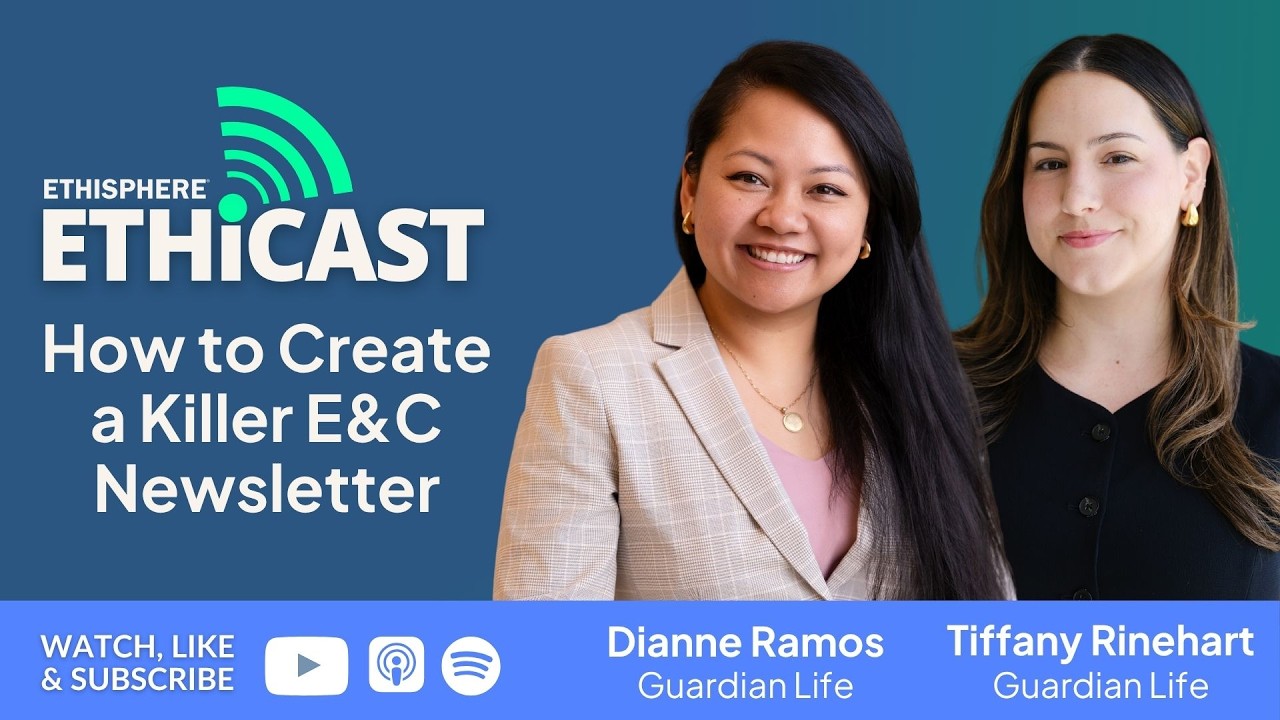
An ethics newsletter competes with every other newsletter in the inbox, yet Guardian Life Insurance’s Integrity Report averages an 84–85% open rate. In this Ethicast episode, Dianne Ramos, Head of Ethics, and Tiffany Rinehart, Head of Finance and Risk & Legal Communications, at Guardian Life Insurance join Ethisphere Editor-in-Chief Bill Coffin to explain how they built it. They walk through the listening roadshows that came before the first issue, a fixed four-part format that leads with real scenarios instead of policy language, the case for publishing only a few times a year, and how they won over HR and employment counsel before opening up about the program’s work. Their conclusion: the newsletter is not the goal. Trust is.
WHERE TPRM MEETS AI: Balancing Risk and Reward

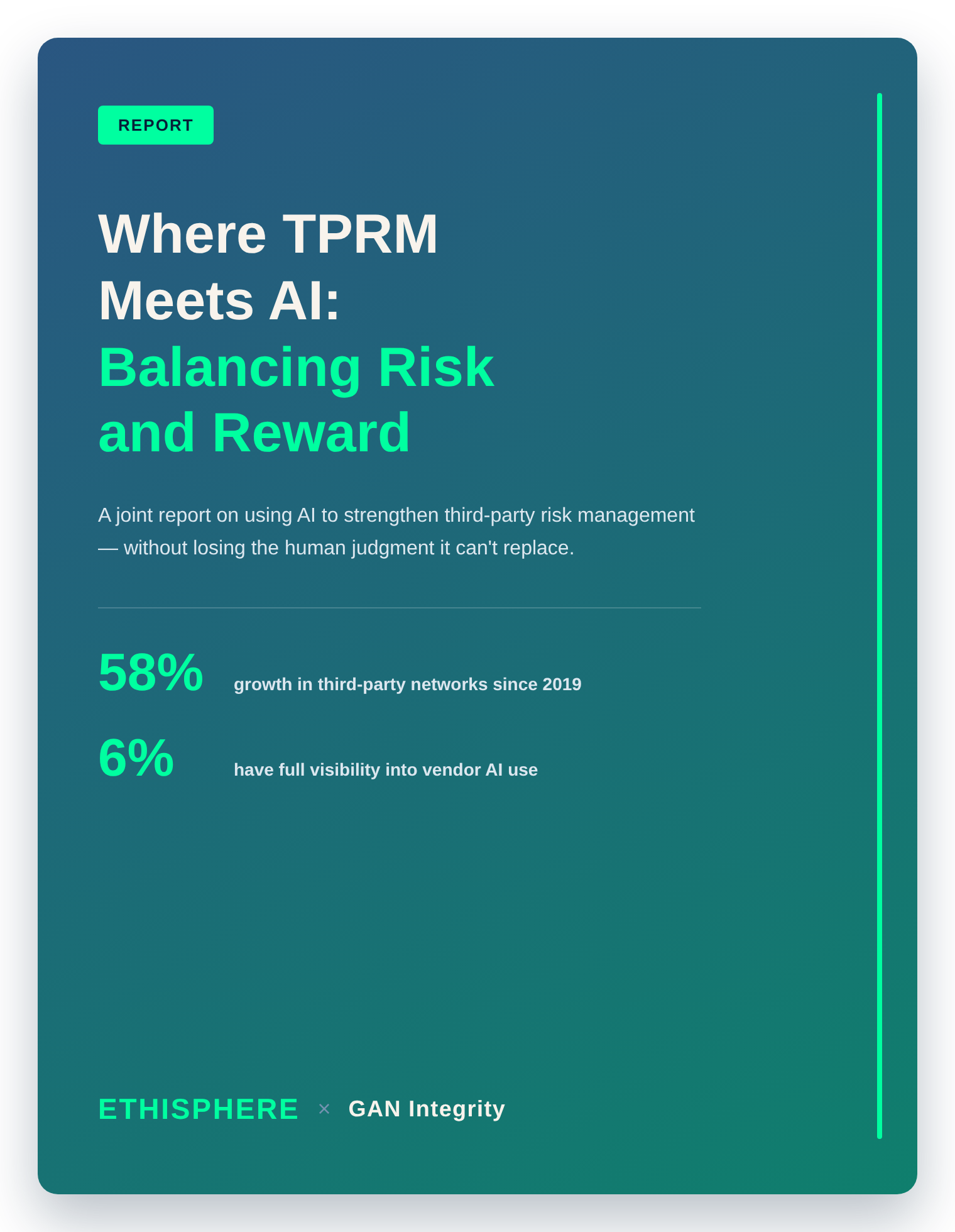
Where TPRM Meets AI: Balancing Risk and Reward

As artificial intelligence reshapes how organizations manage third-party risk, ethics and compliance teams need a clear view of where it helps and where it introduces new exposure.

Developed with GAN Integrity, this report gives ethics and compliance leaders a practical framework for using AI to strengthen third-party risk management without losing the human judgment AI cannot replace.

What’s Inside:

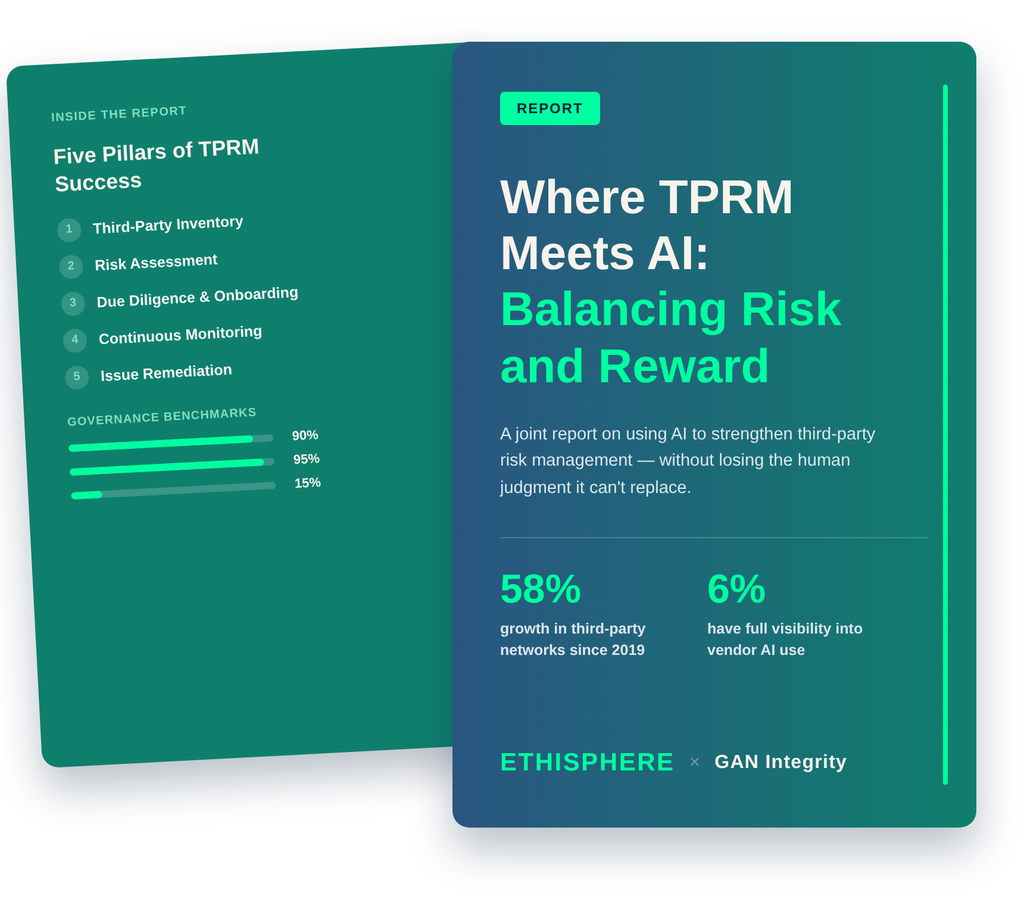
  • The expanding third-party universe, including why 58% of companies added third parties between 2019 and 2022
  • Where AI is already working: one example cut false positives by 77% and sped up vendor onboarding by 50%
  • Where AI raises new questions: only 6% of respondents have full visibility into how vendors use AI, and 25% have none
  • The five pillars of third-party risk management success, from due diligence and onboarding through issue remediation
  • Governance benchmarks from World’s Most Ethical Companies® honorees, including how many document vendor policies and how few address AI use directly

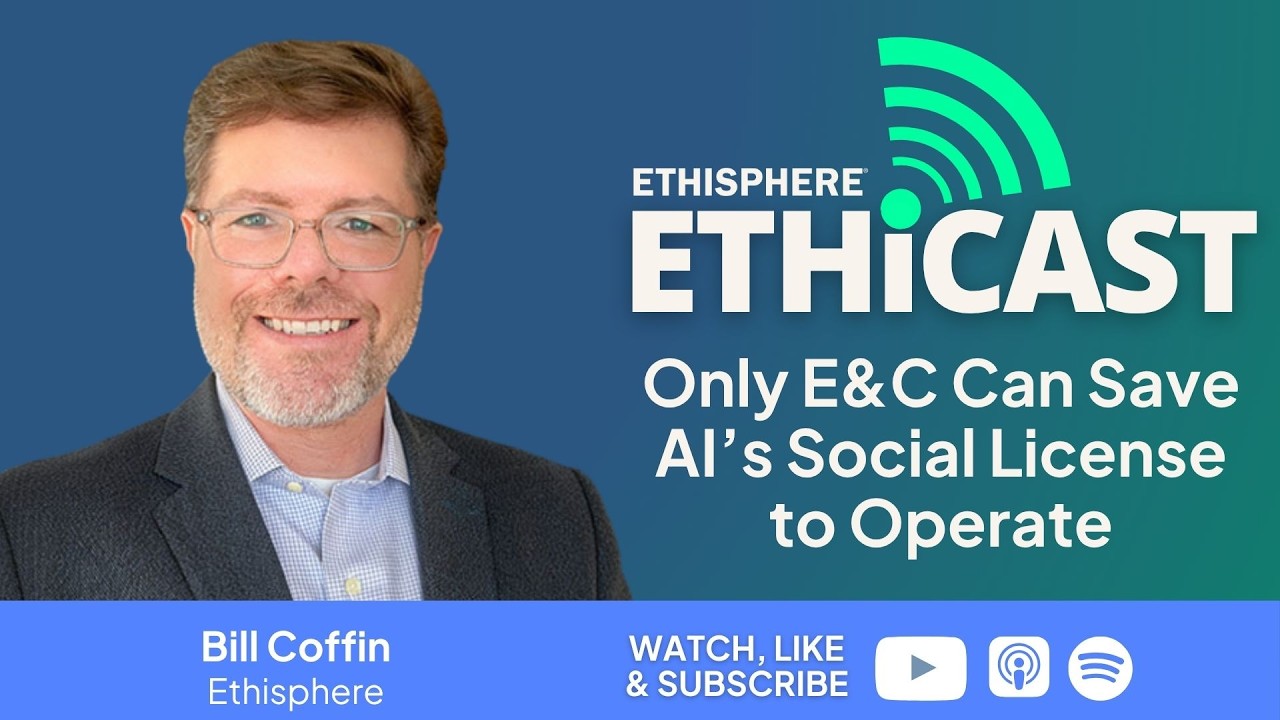
Ethicast: Only Ethics & Compliance Can Save AI’s Social License to Operate 

Ethicast

Only Ethics & Compliance Can Save AI’s Social License to Operate

AI’s social license to operate isn’t a regulatory one—it’s the public’s continued willingness to trust it, and that trust eroded fast this summer. In this episode, Bill Coffin, Editor-in-Chief of Ethisphere, sets aside the usual interview format to make his own case for why ethics and compliance may be AI’s best shot at keeping that license intact. He ties it to Ethisphere’s own research: a survey of 134 senior ethics and compliance leaders found that organizations have handed E&C responsibility for governing AI everywhere else in the business without giving it the tools to put AI to work for its own program.

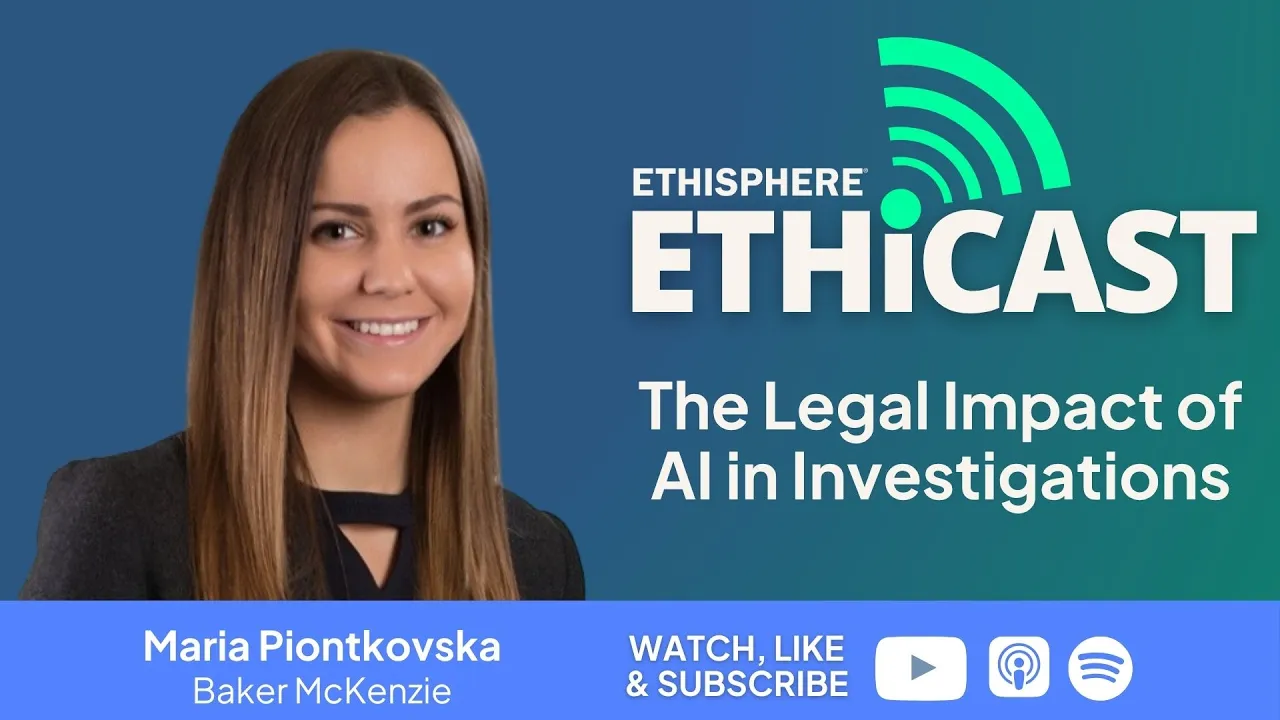
Ethicast: The Legal Impact of AI on Investigations

Ethicast

The Legal Impact of AI on Investigations

Internal investigations are an aspect of the E&C function that faces increasing pressure from a growing volume of misconduct reports worldwide, adding to the ever-expanding responsibilities of the E&C team. Into that mix, AI is giving E&C teams an asymmetrical ability to cover a lot more ground than ever before. AI enables teams to process data with unprecedented speed, discover fact patterns, and reduce the overall amount of time an investigation takes. In this episode, Maria Piontkovska, a partner with Baker McKenzie’s Litigation & Government Enforcement group, discusses how AI is transforming misconduct investigations, both in how they’re being carried out and how misconduct itself is being reported.

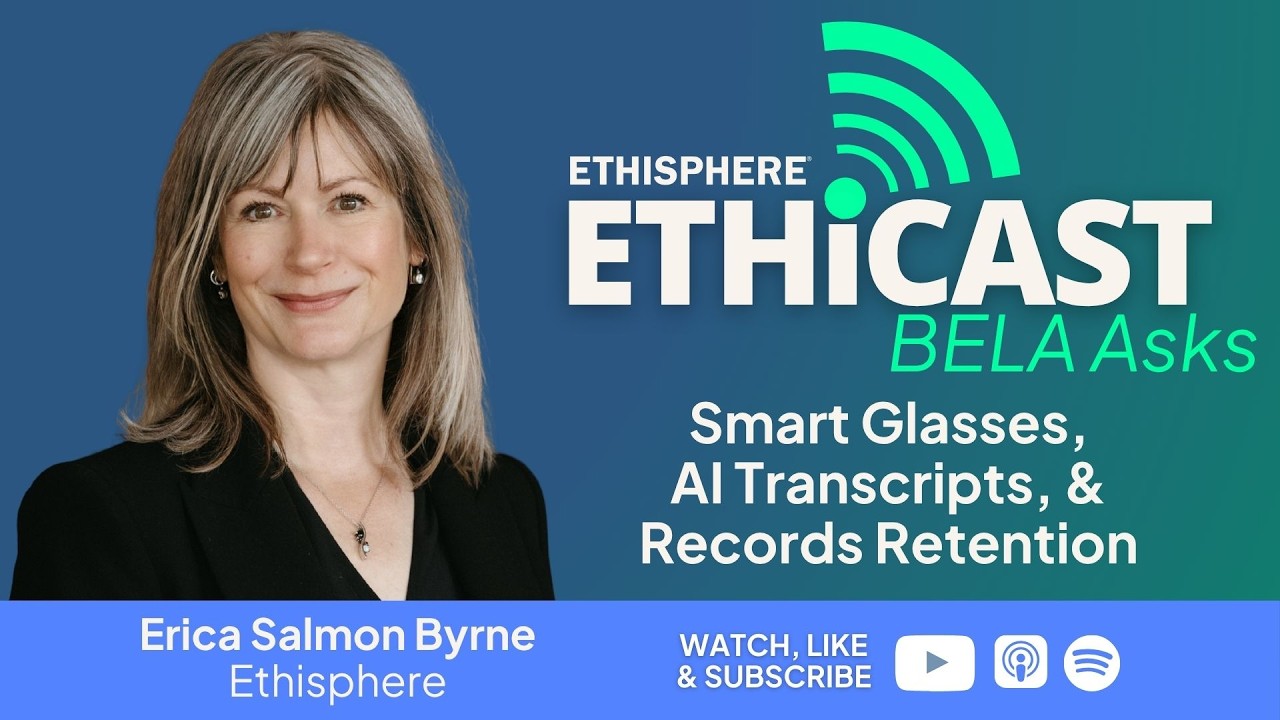
BELA Asks: Smart Glasses, AI Transcripts, and Records Retention

Ethicast

BELA Asks: Smart Glasses, AI Transcripts, and Records Retention

There is no competition in compliance, so we are using this show as a platform to answer high-level questions about business integrity that have been posed to us by the members of the Business Ethics Leadership Alliance, or BELA. In this episode, Ethisphere Chief Strategy Officer and BELA Chair Erica Salmon Byrne answers three questions that have asked recently:  

  • What should I consider when creating a policy around the use of smart glasses?  
  • How do I think about the impact of transcripts and recordings on investigations?  
  • How can I get people excited about records retention?  

You’ve got questions, we’ve got answers!  

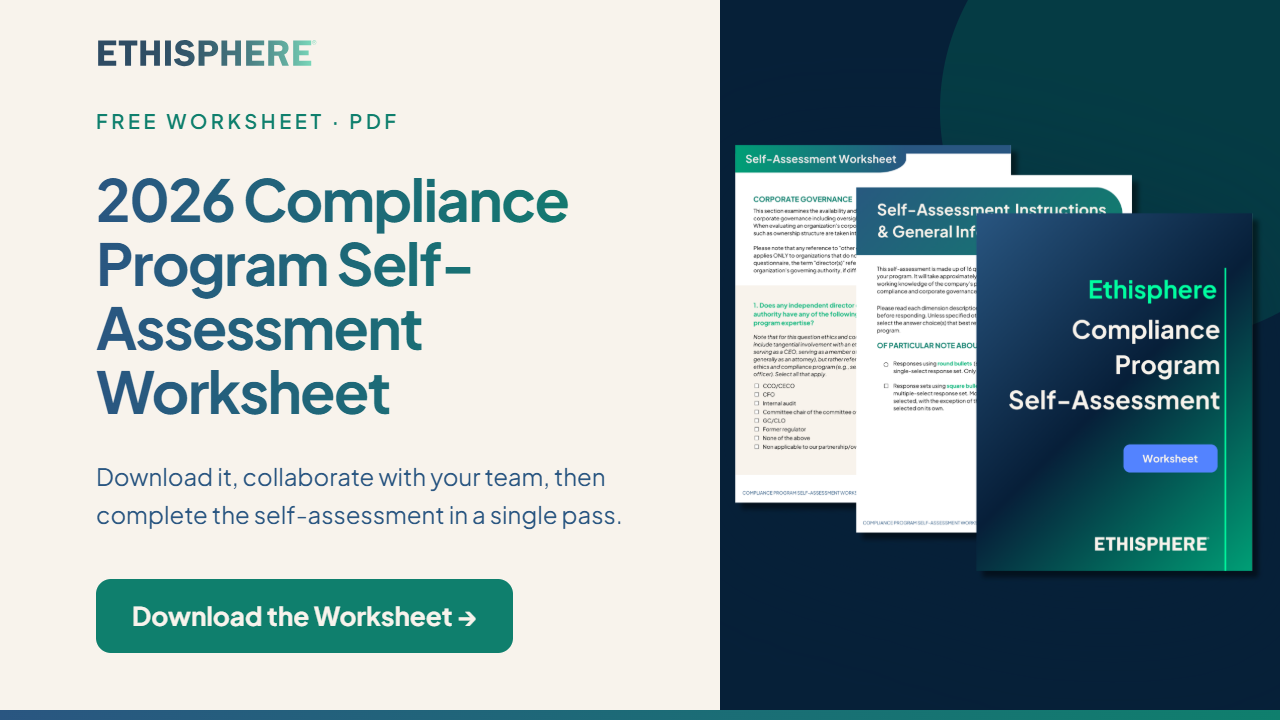
Compliance Program Self-Assessment Worksheet

The Compliance Program Self-Assessment Worksheet

Introducing the updated Compliance Program Self-Assessment Worksheet by Ethisphere. Built from our industry-leading Ethics Quotient® (EQ) questionnaire and benchmarking from this year’s list of World’s Most Ethical Companies® honorees, this 16-question program assessment worksheet is the first step for compliance leaders looking to gain a unique glimpse into the overall effectiveness of their work to date, especially when paired with our automated Compliance Program Self-Assessment.

Download the worksheet to:

  • Review all 16 questions within the self-assessment
  • Allow you time time to collect and review program information being assessed
  • Prepare to complete the full Compliance Program Self-Assessment, which provides a complimentary snapshot of your program’s effectiveness, curated strengths and opportunities for improvement, and analysis and access to additional resources

What’s In The Worksheet

This self-assessment is made up of 16 questions, broken out into 8 dimensions related to
your program. It will take approximately 15-20 minutes to complete and will require a working knowledge of the company’s programs and initiatives in the areas of ethics and compliance and corporate governance. The 8 dimensions include:

Corporate Governance | Program Structure, Oversight, Responsibility, and Resources | Written Standards | Ethics & Compliance Training, Awareness, and Communication | Risk Assessment, Auditing, Program Evaluation, and Detection | Enforcement, Discipline, and Incentives | Measurement of Ethical Culture | Third Party Demographics