World’s Most Ethical Companies Deep Dive: illycaffè

Founded in Trieste, Italy, illycaffè, S.p.A. has been the world’s premium leader and standard-bearer of espresso coffee for nearly a century. Renowned for its ethical values, the company is an 11-time World’s Most Ethical Companies honoree. Its Chairman, Andrea Illy, has long championed ethical business practices and sustainability as a way to build a virtuous cycle between the consumer and company that can help to make the world a better place, one cup at a time.

Congratulations on being named a 2023 World’s Most Ethical Company’s honoree. We all know this is the result of a lot of long-term work and commitment to business integrity. Can you give us a brief overview of why you decided to apply again this year and what your application process was like? What did you learn about your own program as you completed your application?

The reason why we applied for the 11th consecutive time is because we don’t want to be self-referential. Ethics is one of our two fundamental values, which we describe as long-term value building through transparency, sustainability, and people development. But is not to us to state how ethical we are. We need an external audit. And Ethisphere is the most authoritative and respected organization for that. And by the way, it’s unique in its identity because to my knowledge there are no other organizations that assess business ethics. Most of the other organizations assess sustainability or some components of sustainability.

But as you heard with my description about our ethical value, sustainability is under the umbrella of ethics. That is to say, how can you be ethical if you are not sustainable, but you could be sustainable and not necessarily fully ethical, you see? The reason why is because this is our spirit, our philosophy of doing business for improving people’s quality of life. The quality of life for all the stakeholders who are directly or indirectly, impacted by our activity. The quality of life for our millions of consumers around the world, the many thousands of coffee growers we work with, and so on.

As far as the process is concerned, it is a thorough, thorough process. There is a complete set of questions. There is more focus on, and alignment with, ESG principles and particularly, governance. So historically there has been this shift. But other than that, it seems to be for us an annual effort. Of course, we are always a little bit more challenged because the process keeps evolving, but so far so good. Ethics is not a nice-to-have. It has to be really foundational. That is something we see in this application process.
World's Most Ethical Companies Deep Dive: illycaffè
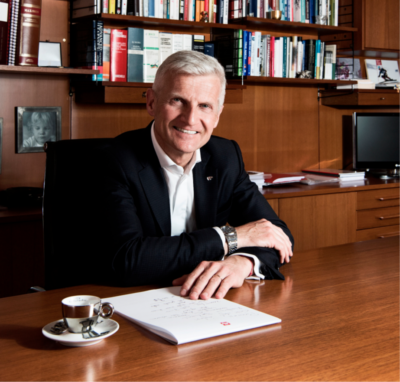
Andrea Illy, Chairman and former CEO of illycaffè and co-chair Regenerative Society Foundation

Business ethics and integrity are essential to illy’s identity as a company and its culture. Can you talk about how illy’s business strategy is made more achievable because of the way that your organization operationalizes ethics, compliance, and business integrity?

For us, ethics is a business enabler and a fundamental builder of value. First, let me speak to a principle which is true for any company and then go specifically on Illy’s ethics. Some, shall we say, detractors of so-called business purpose in corporations, they state that the only mission and responsibility of a business is to make a profit. I don’t think is the correct statement because ultimately this economical goal would be not to generate profits, but to generate enterprise value.

The way you calculate enterprise value is with a so-called discounted cash flow formula. You have revenues and then you have costs and then you discount resulting cash flow to the cost of money. The three components are entirely dependent on your ethical profile. If you are not an ethical company, you typically have decreasing returns because maybe some reactions in the market make some customers run away from your company or maybe you have to discount more in order to retain customers. For sure you don’t benefit from the so-called reputational premium if you are not an ethical company.

As far as costs are concerned, if you are not ethical or sustainable, you might have liabilities no matter what else you do with regard to environmental social, or governance. And so, you have decreasing returns from the cash flow, and then you have to discount with the cost of money, which is inversely proportionally to the risk of the business. Typically, if you are a company which is not recognized to be ethical in the market, and as a result of that you have a reputational disadvantage, then your cost of money will be higher.

This just to say that ethics and sustainability—and you can name these things in different ways—are the biggest value-builders for corporations. You could have two companies with the same cash flow, and if one is considered ethical and the other is not, the ethical one will have a higher overall business value. As far as Illy’s concerned, this effect is even higher. Why is that? Because we do coffee. Most of the coffee we source is produced in low-income countries, where we can encounter some significant issues. First of all, there can be an enormous problem of inclusivity. There can be an enormous problem of human rights—thankfully, that is no longer true in certain cases, but it can still happen now, and we have to control that. And there can be significant problems with environmental sustainability as well.

So, in 1991, we decided to pioneer direct sourcing, and we started working hand-in-hand with coffee growers, which has become the most significant aspect of our ethical engagement. Having this hand in hand work has built our relationship and community with coffee growers. We have even a kind of community which is called Circolo illy, in which coffee growers from all over the world participate in order to interact, exchange knowledge, and create a loyal relationship with Illy.

We pay them more. How could we ensure that the price premium you pay gets in the grower’s pocket if we wouldn’t be in direct relationship with them? We enable the grower to sell coffee to us by elevating their sustainable quality practices through knowledge exchange. Our University of Coffee educational program trains thousands of growers every year on the concepts of sustainable harvesting and business practices.

Those are just a few examples. And then of course, if you are recognized as a sustainable and ethical company, then you can command a premium in the marketplace. Illy has a significant premium price versus its competition. Our ethics makes that possible.

“Our partnerships are really doing well in Brazil. They recognize that working with Illy facilitates selling their coffee to the rest of the market. And the coffee that they don’t sell to us sells to the rest of the market at a premium, because they have a reputational endorsement from selling the coffee to us.’”

When Illy began partnering with its local coffee growers back in 1991 the notion of a premium coffee, especially in the United States, was still a somewhat foreign notion. As that market rapidly transformed and grew, the way in which illy pioneered how it sourced its coffee was so revolutionary and transformative. Did you ever face opposition to this methodology, though? And if so, how did you overcome those obstacles? Clearly, it has worked out very well for illy.

In Brazil, where we started direct sourcing, our approach has been warmly welcomed at every level— institutional, regional, professional, and of course locally at the growers’ level. And this facilitated the achievement of our sourcing goals. At the beginning, we weren’t even dreaming about the possibility to source 100% of our coffee directly from the grower. But we eventually reached that as a result after 10 years.

We also reached a very ambitious goals in term of consistency. At the beginning, I remember we were accepting only 10 percent of the samples which were sent to us. Now it’s over 70 percent. When I was in Brazil a few weeks ago, we inaugurated a new award for two Brazilian members of the Circolo illy, which recognized over 30 years of consistent partnership in selling coffee every single year. Can you imagine that? There are already two members over 30 years and there will be probably three more to come next year.

So, Brazil has been a model for us, and I’m so pleased, because we started targeting quality there, and then we started to target resilience and adaptation to climate change. Now we are targeting regenerative agriculture and I am very happy to say that 70 percent of the growers we use now grow coffee using reliable regenerative practices. So, our partnerships are really doing well in Brazil. It’s kind of a symbiosis. They recognize that working with illy facilitates selling their coffee to the rest of the market. And the coffee that they don’t sell to us sells to the rest of the market at a premium because they have a reputational endorsement from selling the coffee to us.
The responses there have been very, very, positive. I remember when the Brazilian parliament, at the federal level, in Brasilia, made an official public acknowledgement for my father as the man who triggered the change of the Brazilian coffee agriculture. Quite amazing.

But it has not been like this everywhere. In one country in Africa, we have had pushback from the intermediaries who were quite disturbed by our approach because we were paying more to the growers. The intermediaries were saying, “Hey, if illy pays more, then we will be forced to pay more as well.” And this created something they really didn’t want. There have even been some violent reactions against our approach. But still we have been able to manage and develop our model there in a positive way.

In another country, in Asia, we encountered some indifference, where the response to our approach was, “Who cares? Come on, this is just nice to have.” But you know, we source from 20 countries. There have been 18 positive experiences and only two that have been a little bit more difficult. It very much depends on the specific country because each country is different.

When COVID-19 happened, a lot of companies suddenly became very aware of their supply chains and their need to manage third-party risk within them. This is something illy has managed masterfully for a long time. For companies that are just starting to work on this, where is a good place for them to start when it comes to exporting ethical standards and corporate culture to third parties?

If you are talking about traceability, this is the very first step for creating true sustainability, whether we are talking about social or environmental sustainability. A lot of businesses that hide behind the difficulty of tracing and getting access to their entire supply chain as reasons not to do them. But in reality, I think everybody can do those things. This is why I kind of like to declare how being able to really document the information and relations within every single step of the value chain is of paramount importance for an ethical company.

For organizations that wish to apply to the World’s Most Ethical Companies®, what advice would you give them based on your own organization’s experience? And especially the fact that you have been doing this for a very long period of time and you’ve been successful at this for a very long period of time.

Don’t fake it. Make it only if you are really intrinsically committed to sustainability. We hear a lot about this term, greenwashing. For me, greenwashing is not okay. For some, it is tolerable only if it is temporary and in the spirit of “fake it until you make it.” Because if you start greenwashing one day, you will really need to accomplish something serious environmentally. Otherwise, you are going to get attacked for it, because what you are doing is basically illegal. It’s fraud.

But then you also have this new word, which is greenwishing, which is aspirational. If you are aspirational in being one of the World’s Most Ethical Companies, you can use the application process as a path for improvement. But don’t do it just for the recognition because your efforts might feel diluted if you don’t succeed in receiving the honor. Or it may be even more diluted if you put it on your packaging, and then one day you don’t get the recognition because you have not been consistent. This creates a problem.

And then finally, ethics really needs to be embedded in the business culture. At illy, this is an aspect where we do not score as highly as we would like. I think everybody in the company is fully invested in an ethical culture, so I will check the questionnaire and understand why we did not score more highly there. Because ethics very much needs to be completely embedded and embodied by every single individual in the company.
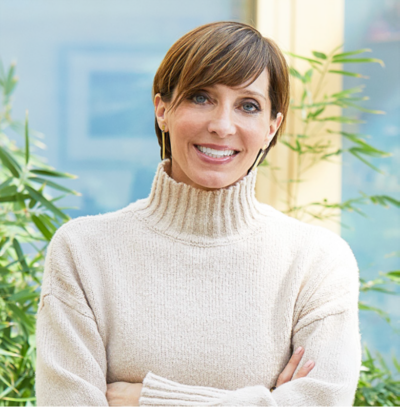
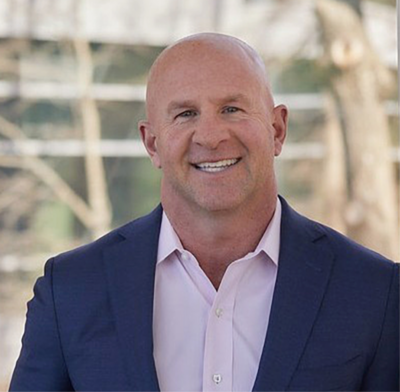
World’s Most Ethical Companies Deep Dive: Hasbro

For twelve years running, Hasbro, one of the world’s most prominent makers of toys and games, has earned World’s Most Ethical Companies honors. For its Chief Purpose Officer Kathrin Belliveau, earning that honor is all about the joy of play, the power of purpose and why it’s okay that everybody cheats at Monopoly.

Congratulations on being named to the 2023 World’s Most Ethical Companies. This honor is the result of a lot of long-term work and organizational commitment to business integrity. With that in mind, why does Hasbro apply for this honor year after year, and what are your experiences like with the applications process?

As an organization, we are committed to benchmarking against best in class companies with respect to compliance, ethics and ESG. For us, it is a deep honor is not only going through the process and being named, but also learning through the process.

Every year, methodology changes in the application, highlighting new and emerging areas of ethics or compliance. As an organization across various aspects of ethics and integrity— whether it’s ethical sourcing, human rights, or our internal compliance and ethics program – for us, it’s a really incredible opportunity to benchmark against world class expectations and standards. So, the learning and measuring process is one of the key drivers for participation in this process.

A lot of companies say that the application process is a very valuable experience, because of the benchmarking aspect of it, like you mentioned. Is the self-assessment aspect of the applications process something you would be interested in doing, even if there wasn’t a potential honor attached to it?

Yes, absolutely. In fact, we do that across our entire Purpose organization and ESG practice, where we continuously score ourselves as part of our continuous improvement process. Whether that’s in the areas of human rights and ethical sourcing, or social impact, climate, and sustainability, constantly looking at external stakeholder expectations, best in class standards, and comparing ourselves. We do that quite frequently, and I would say that World’s Most Ethical Companies is probably the only benchmark exercise where there is potential recognition at the end.

Every World’s Most Ethical Companies honoree has a unique set of challenges, opportunities, market realities, and avenues towards achieving excellence. Can you speak to Hasbro’s unique perspective on ethics, compliance, and integrity, and how it informs your larger business strategy?

One of the challenges we have, like many Honorees, we are a global organization. And as a global organization, our ethics and responsibility program is our North Star. It’s something that provides an equalizer across every office we have around the world, across more than 50 countries. For us, it’s something that creates a norm for our values and the expectations that we have for our employees and our workforce, and what really binds us together.

One of the ways that we navigate our global business is by having a well understood set of compliance and ethics standards, together with our values, to really drive organizational consistency and be very clear with emphasis re: Hasbro expectations for operating globally around the world. Because we know there are many different cultural norms, many different regulations, many different global laws, that we are subject to. But we also feel very strongly that a successful organization needs to have its own core set of behaviors and ethical requirements.

Our core values inform every opportunity that we have, whether it’s commercial, marketing, or manufacturing.

World's Most Ethical Companies Deep Dive: Hasbro
Kathrin Belliveau, EVP & Chief Purpose Officer

As one of the world’s most recognized makers of toys and games, Hasbro is a very public-facing enterprise. Everyone who reads this article either has played with their own Hasbro product at some point or bought one for friends and family. It’s one of those omnipresent enterprises. Could you talk about how that heightened visibility factors into how you execute your ethics, compliance, and integrity work?

As a company that has the privilege of being in households around the world, and serving children and young adults, generally, there’s an expectation around what we are producing, and what’s going to be enjoyed by families and fans. There’s an expectation that the company producing beloved toys and games is doing so in a manner that respects human rights, operates ethically with an eye towards sustainability, and promotes safety across the board. Safety is paramount, particularly with toys and games intended for young children.

With privilege comes responsibility, and we aspire for the Hasbro logo, to serve as a quality mark.

One of my favorite quotes from the children’s educator, Fred Rogers, was that

“Play is often talked about as if it were a relief from serious learning. But for children, play is serious learning. Play is really the work of childhood.”

On the flipside of that, I am, myself, a longtime player of Dungeons & Dragons, and one of the things I have noticed in recent years is that the cultural direction of the game has made it more accessible to more players than ever before. The level of representation we now see in the game, especially for marginalized people, is such that I have seen the game directly benefit the mental and emotional wellness of its players in a deep and meaningful fashion.

I raise these things because Hasbro has a terrific purpose statement, which is, “Our purpose is to create joy and community for all people around the world. One game, one toy, one story at a time.” That is the first purpose statement I’ve ever seen that has the word joy in it. And when you look at your core values, one of them is simply, PLAY.

Given that these things are not just idle amusement, and that in some places they meaningfully improve people’s lives, as the Purpose Officer, how does the way in which you help to create safe products and a profitable company translate into making lives better in a way that maybe people don’t often think of?

Thank you so much. That’s such an important question. And it’s actually something that is core to everything we do.

We believe, each and every one of us—and myself personally, and in my capacity as Chief Purpose Officer—that play is a fundamental human need. It is a human right, and at the end of the day, it is not just for amusement, although there’s a lot of benefit to amusement and laughter. But it is also absolutely critical to our emotional, mental, and physical well-being.

Across our product lines, whether it’s Magic: the Gathering tournaments, Dungeons & Dragons-style storytelling, active play outside with NERF, or even our preschool board games that teach counting or winning and losing… we impart important life lessons.

We even saw this during the height of COVID, when manufacturing was shut down. We source in the U.S., including in Massachusetts, Texas, and other locations. And when manufacturing was shut down, we talked to the Governor of Massachusetts about how our products were being used not only for mental health and well-being, but also by teachers in online teaching across the country. The Governor agreed with us, and so our products ended up being deemed “essential products”, and manufacturing was allowed to be reopened. That was so remarkable, and I am so proud of that, because that was fundamentally about the understanding and belief that games and toys actually serve a human need for play and for education. I think about social impact in everything we do to bring joy to children, especially in parts of the world like Ukraine or children that have been impacted by devastating natural disasters. Joy is a fundamental human right.

When my girls were little, and we would go to see the pediatrician, the pediatrician would say, “Are they eating? Are they sleeping?” And I would always think to myself, “Where’s the question about whether they are playing?” Because to me, play is part of the well-being of a child, and how healthy human beings are formed.

So, thank you for asking that question. I really appreciate that because for us, that’s what it’s all about. When we refreshed our purpose statement about a year ago, we considered the communities that are created through play, whether they are online or in-person, or it’s just you with your family. That is a community memory and experience that ultimately leads to well-being. Even if you’re fighting and cheating over Monopoly, at the end of the day, you’re still building an experience and wonderful memories. And I think we need more of that in the world today, quite frankly.

I wholeheartedly agree. I will tell you that as the head of an ethics publication, I know of no one who has played Monopoly and has not, at some point, seen somebody cheat at the game or cheated themselves. One of the most powerful lessons in institutional honesty that you’re ever going to get is by going around that Monopoly board.

It’s funny … as a tongue-in-cheek gesture, we released a special edition Cheaters Monopoly a few years ago, and it was just a funny nod to the fact that many in this game cheat. We were trying to poke a little fun at the fact that it’s a very long game, and people get very competitive about it. My husband is a real estate lawyer and of course loves Monopoly. He is very, very good at it and he will not give in until the very bitter end. Sometimes we need to cheat just to get it over with!

What is your favorite token when you’re playing Monopoly?

Oh, that’s a great question. I love all of them, but my favorite is the thimble because my grandmother was a seamstress.

Mine is the top hat. I just love how it rocks on the board. That, and it prevented arguing with my brothers over the race car.

It’s a classic. It’s Mr. Monopoly’s hat, you know.

What is one of the most inspiring things about your ethics and compliance program that people outside of Hasbro are not likely to know about?

One of the things that’s very interesting about toy and other consumer product supply chains is that the workers on the factory floor are primarily women. In some countries, it’s a matter of women workers simply being less skilled. In some, it’s cultural and societal. Our hope is that one day they become the factory managers, and they’re the ones who are the leaders on the line. But again, there’s so many cultural and structural obstacles in those countries. In the U.S., it’s a little bit different because here, we primarily manufacture games, which is mainly paper and cardboard. That’s very easy to automate. But if you go to a toy factory, that’s very much a lot of human energy.

As a company, we are dedicated to DEI. As a female leader myself, I have a lot of women who are senior leaders on my team. And at the end of the day, we’re working across our entire workforce to ensure that women set goals for themselves, and are represented in leadership. And we do this for other lesser-represented groups, as well.

Looking at our toy supply chain, the workers on the factory floor are primarily women across the globe, and the managers are men. We don’t own any factories, but we have very rigorous programs across the world, and we’re on the factory floors when product is being produced. We are very engaged with the vendors to make sure they’re upholding our business ethics principles, so we decided that we would implement a program to help elevate the lives of women on the factory floor.

We have a number of programs in India and China, and we’re introducing them in Vietnam and around the world, where we provide programs that the factory owners support because we have demonstrated it’s a win-win for everyone. Their workers get to go to classes, and we offer everything from health and hygiene to financial literacy. What we’ve seen over the last several years, where we have been measuring the impact of these programs, is that the factories have become places where the workers actually want to work. Even though women working there are becoming upskilled and in some cases leaving, management are not upset because they’re actually building a more engaged, happy workforce and desirable workplace.

So that’s one of the programs where we’re scratching the surface of what we can accomplish. But already what we’re seeing from the results is inspiring. We know we’re starting to make a difference, and everyone around the company is so moved by it because it’s something you can see.

Hasbro has earned World’s Most Ethical Companies honors on a long-running basis. How have you maintained such a high level of consistent excellence, even as business, regulatory, and economic conditions change year after year?

It goes back to our North Star that every employee around the world understands how we operate. It’s the lens through which we look at every opportunity. We don’t take being honored lightly, and we certainly don’t expect it on an annual basis. We’ve been honored to be recognized 12 times, because conditions change, expectations change, and what we try to do as a company is continuously improve and evolve.

New team members representing different generations are entering the workforce, and they have different expectations, so as a company we try to stay true to our North Star. But we’re also flexible, and we’re really committed to continuous improvement. I think that’s probably the one thing that we really do: commit to continuous improvement. We also benchmark extensively. We’re continuously looking not just within our industry, but to learn from the successes of our peers, especially when it comes to ethics and compliance. We never stay still. We’re continuously evolving, assessing, reassessing, and self-critiquing to make sure that our North Star is constant. But how we achieve that North Star is continuously evolving, too.

Would you recommend that other companies seek World’s Most Ethical Companies acknowledgement? And if so, what advice would you give them?

I think that for any company that is seriously committed to ethics, operating responsibly, and sustainability for their stakeholders, the process and the methodology of World’s Most Ethical Companies is best in class. I would highly recommend it to companies that are looking to start an ethics and compliance program and for companies that have been at it for a long time and want to see how they can improve.

I think it’s an incredibly valuable exercise. And if you’re able to attain it for your employees, your shareholders, and your stakeholders at large, it really means a lot, because it’s a very prestigious honor. It’s a real testament to your company. But even if you don’t achieve it, it is a great framework and set of standards to aspire to. And inform your program globally as well, so I highly recommend engaging in the process.

For us it’s been a continuous learning experience. We are an organization committed to learning and innovation. This process is a way to measure how we’re doing on an annual basis.

ABOUT THE EXPERT

Kathrin Belliveau is EVP & Chief Purpose Officer of Hasbro, Inc. As a member of the Executive Leadership Team she reports to the CEO and is responsible for ESG, Climate, Sustainability, Human Rights, Ethical Sourcing, Global Quality Assurance, Global Product Safety, Philanthropy and Social Impact, Global Corporate Communications, Global Consumer Affairs, Global Government, Regulatory and External Affairs, and Global Events at Hasbro.

World’s Most Ethical Companies Deep Dive: FedEx

In the time it takes to read this interview, a FedEx delivery vehicle will probably drive past your home or office at least once. Such is the omnipresence of one of the world’s foremost transportation, e-commerce, and business services. For Chief Compliance Officer Justin Ross, overseeing a compliance and ethics program that brings it all together takes vision, confidence, culture, and innovation.

Why did FedEx apply this year?

FedEx has been around since 1973. But compared to the rest of the company, our Compliance team is still relatively young. Before 2015, our compliance function was very decentralized and resided in our various operating companies. From a legacy perspective, these companies operated independently, and each of them did their own thing on compliance. The operating companies did a good job on compliance and had their own initiatives and strategies, but there was no corporate oversight of compliance, which resulted in a lack of consistency, not a lot of transparency among the compliance teams, and some duplication of resources.

In 2015, we created a compliance team at the corporate level to oversee compliance for the enterprise and began centralizing a lot of our compliance programs. Since that time, the compliance teams have worked really hard to create a truly enterprise compliance program that is consistent across the board and contains many leading practices. We’ve also done some really neat things around risk assessments, automation, and data analytics that got us thinking we were at the maturity level where we could be considered for this honor. Two, three, five years ago, I wasn’t sure we were ready for this. But our program has evolved to the point to where I thought we would be very competitive.

A lot of large organizations have operations that recognize the local realities of their field offices, but at some point, there needs to be a single source of truth. That’s a lot easier said than done.

No doubt. A lot of times field offices or independent business units want to do their own thing or don’t want the corporate office to tell them what to do on compliance. But they’re not going to do something just because you tell them to. The key is to show that there is value to the organization and to any independent business units of a consistent, enterprise compliance program with consistent processes, controls, training, and tools. By sharing best practices, emerging risks, and compliance resources and tools, the entire organization can be more efficient and ultimately more compliant. We’ve gone through this journey at FedEx and the compliance teams have succeeded in main part because we have shown value to the business.

World's Most Ethical Companies Deep Dive: FedEx
Justin Ross, Chief Compliance Officer

What was the World’s Most Ethical Companies applications process like for you?

It is an arduous process. To anyone that wants to go into this, be prepared. It’s not a weekend. You’re looking at every aspect of your program to see how it shapes up against best practices, which Ethisphere really has a good handle on. To me, going through this process is the best self-evaluation of your program that you can do because you are looking at all the best practices, and that really helps you evaluate where are your gaps, where are you good, and where you need to do more.

What I like about it is that it’s not static. Each year, Ethisphere adds something to it. Look, best practices aren’t static. Regulators expect different things. You know fraudsters are doing new and different things to companies. So this gives us an opportunity to look at an evolving data set of best practices and react accordingly by updating our program.

FedEx is extraordinarily present in our lives—there are FedEx trucks passing outside of my window right now, in fact. How does the highly visible nature of your work impact how you view and operationalize ethics and integrity?

Because we’re such an integral part of everyone’s supply chain, it’s extremely important, I think, for us to set an example on ethics and integrity. First of all, our customers expect it. Our big, global customers come to us all the time and ask us to tell them about our ethics and compliance program. They want to know about the stability of our supply chain and our due diligence practices. And we have to show our big customers our ethics and compliance program, because it’s important to them. We’re part of their supply chain. That’s why it’s important we act as an example, such as being honored by World’s Most Ethical Companies.

We’re also setting an example for the people downstream in our own supply chain, as well for our vendors and business partners, on how important this is to us. We have over 550,000 team members and operate in over 220 countries around the globe, so our potential span of influence is huge. It’s why ethics and compliance is so important to us and why we stress the importance of ethics and compliance to our business partners. By doing this, we can hopefully make a positive impact on the communities where we operate as well.

How would you say that your ethics compliance program aligns with or further empowers your organization’s strategic vision, especially from a supply chain standpoint?

I think its really about trust here. Our overarching company strategy is Deliver Today and Innovate for Tomorrow. Deliver Today focuses on the immediate work at hand, which is to provide superior service to our customers. A big part of that customer relationship is centered around trust. Our ethics and compliance program and the FedEx culture help us to build and maintain that level of trust with our customers. And that is absolutely critical to our business’s success.

The second part of our strategy is Innovate for Tomorrow. And our compliance team has really leaned into this strategy through our work around automation and analytics. With automation we are moving our processes away from manual processes and into automation. This will help us be more efficient and allow us to better allocate our people resources on higher risk issues. Our company leadership has also challenged all of us at FedEx to Innovate Digitally by finding ways to use data to be more efficient and better serve our customers, and the compliance teams are trying to further this organizational strategy through our work in automation and analytics. We are continuing to find ways to use data analytics to improve our compliance program, specifically around prevention and detection of wrongful conduct and identifying and managing compliance risk. We’ve made some great strides here with our hotline data and accounts payable transactions.

What projects in the last year have really helped you move the needle at FedEx?

One project that I think we’ve really improved and helped embed compliance within the business is our compliance risk assessment. When we first began doing our compliance risk assessments, they were very ad hoc, very manual, very surface level. We’ve really changed that to where we’re doing compliance risk assessments in each business unit for the risks that we own, such as anti-corruption, antitrust, fraud, export controls, data privacy, gifts and entertainment, things like that. We do that on a rolling basis, working closely with the compliance teams in that business unit. We do extensive business partner interviews with those business units where we’re trying to identify the risks that they’re seeing. Through these interviews, we’ve really helped improve the visibility of compliance and ethics in those business units and embed compliance within them. We’ve helped stress the importance of compliance and ethics to those business unit leaders.

Those risk assessments have helped us embed compliance within the business because we’re there learning about risks within that part of the business, but we’re also teaching them about compliance and ethics, and how to manage those risks. So that’s something that the team’s been really proud of. We touched every piece of the business over the last two years doing that.

And we have gotten such great feedback from the business on these risk assessments, too. Every time, the business comes back to us and says, “Thanks for coming in here. We’ve got a better view on ethics and plans. We know where to go now, where we didn’t necessarily before.”

“Every time, the business comes back to us and says, ‘Thanks for coming in here. We’ve got a better view on ethics and plans. We know where to go now, where we didn’t necessarily before.’”

What is FedEx’s culture of ethics like? And how has your team’s work helped to advance that culture across the organization?

My job is way easier because of FedEx’s great ethical culture that was at FedEx long before I got here. I’ve worked all over the world for FedEx. Everywhere I go, there is a sense of doing the right thing. And that makes the compliance teams’ jobs so much easier.

And it starts at the top, with our senior leadership. In every communication that goes out from senior leadership, safety and integrity are always stressed. And senior leadership is always willing and able to support the compliance teams on our compliance initiatives, whether it is making a video for compliance week, communicating the importance of a compliance initiative, or providing input about our various compliance programs.

I’ll give you one example that really highlights the FedEx culture, specifically from our senior leadership. We have an annual compliance champion selection process where employees are asked to nominate a compliance champion. After the nominations come up, we have a steering committee that will select the champions. The first year we did this, I reported the winners and why they were chosen at the quarterly Audit Committee meeting. After the meeting, Our Audit Committee Chair asked me for the names and emails of those compliance champions. He sent them a personalized note, and you can’t over-emphasize how much that means to those compliance champions. That really makes an impact. To me, that’s tone at the top. And it’s walking the walk.

But even with our great existing culture at FedEx, we have to continue to work on it to make sure we maintain that great culture. And the compliance teams play a big role in that, mainly around making sure employees understand the importance of an ethical culture, the importance of speaking up, and making sure that wrongful conduct is appropriately and consistently addressed across the company. We do this through a variety of measures, including embedding culture ambassadors in our various business functions, publishing compliance newsletters, publicizing lessons learned taken from real scenarios within FedEx, educating employees about the consequences of cultures gone bad, and recognizing compliance champions. We also periodically gauge our culture and the effectiveness of our compliance programs through culture surveys and follow up with real action plans from those surveys.

“When we get the World’s Most Ethical Companies honor, our customers see that. And that makes them comfortable to do business with FedEx employees.”

It’s great to see how your leadership gets directly involved, whether it’s when you reach out for support, or when they participate in communicating your team’s objectives. Not all leaders do that, and there is real power when the tops of the organization take time out of their day to get on camera and lend their voice to your program.

When we see that, it motivates us. So. If you’re a compliance team and you’re not getting any support from senior leaders, it is absolutely demoralizing. But when you see senior leaders really showing an interest in compliance, and answering the call whenever you ask, it really motivates and empowers our team, as well as the entire company. That’s why Tone at the Top is so important to an ethical culture and effective compliance program.

Why is earning the World’s Most Ethical Companies honor important to your organization?

Our compliance teams work very hard. And to see us recognized for something like this is absolutely key to making the teams feel appreciated, motivated, and like they’re making an impact. It’s been great for my team and to our other compliance teams within the business units.

The other thing is, it is really good for business. I’m telling you, our customers ask us about our compliance program all the time. They want us to tell them about our due diligence. How we manage risk. And these aren’t one-off, easy conversations. These are in-depth presentations with our big customers around what we’re doing on ethics and compliance. When we get the World’s Most Ethical Companies honor, our customers see that. And that makes them comfortable to do business with FedEx.

Employees want to work with ethical companies. Investors want to invest in ethical companies. Customers want to do business with ethical companies. And communities want to have ethical companies in their community. So this honor is good for all of those stakeholders. When World’s Most Ethical Companies was announced this year, that morning, I got so many calls of congratulations.

This award is not a singular award. It’s not about one person. And it’s really not even about the Compliance team. It’s about the organization. There is no way FedEx could have achieved this honor without the support of all of our team members across the organization, from the top to bottom. It’s something that we all should be proud of, not just the compliance teams. Every single person that works at FedEx that had a say and had input is a reason why we got this. I think that’s important to say because this interview may be with me, the Chief Compliance Officer, but our front-line employees, drivers, operational workers, back office employees, they all have as much to do with this as I do, or my team does.

ABOUT THE EXPERT

Justin Ross is Chief Compliance Officer for FedEx Corporation, responsible for developing and overseeing enterprise-wide compliance programs for FedEx operating companies and international regions.

World’s Most Ethical Companies Deep Dive: Clarios

Clarios is one of the world’s leading providers of energy storage, manufacturing about one in every three car batteries on the road. It is also less than four years old, having recently separated from Johnson Controls. So how did it earn its first-ever World’s Most Ethical Companies honor? In this conversation with Deborah Spanic, VP, Chief Ethics and Compliance Officer, we learnt that it’s all about trust, local control, and an unwavering conviction to live by integrity.

Congratulations on being named a 2023 World’s Most Ethical Companies honoree! Why did you decide to apply this year, what your application process was like, and what did you learn about your own program as you completed your application?

We always have valued the benchmarking that the World’s Most Ethical Companies process provides. To me, that’s one of the greatest benefits we get from it. A lot of the work that goes into submitting for World’s Most Ethical Companies allows us to understand what we need to improve and where ethics and compliance is evolving more broadly, because the application process itself evolves. Every year, there are always new areas of focus that are good indicators of what we need to pay attention to.

Ours is a cross-functional team. We rely heavily on our ESG team for the sustainability portion. HR, Finance, and Procurement all contribute to getting our documentation ready and getting our application filed. When the application asks certain questions that I don’t have answers for, I track down who in our organization would know. And I learn all kinds of really great things about our organization that way. So applying has been a very beneficial process for us.

Clarios separated from Johnson Controls a little over three years ago. There has been a lot of work to get our programs up and running, and a lot of things have evolved. Forcing ourselves to step back and take stock of what we’re doing, and also seeing where we might have gaps, is extremely valuable, particularly when you are experiencing relatively rapid growth and change.

What are some of the most important things that your program has achieved in the last year or so? And how have they positioned you to achieve your strategic goals for the next year or so?

We were finally able to wrap up our three-year implementation plan. As a brand-new company, getting our program in place has been our primary focus for the last three years. Now that we have wrapped up the implementation of our program, I feel like we can ask ourselves, where we can work on fine tuning? Where can we work on addressing gaps? And where do we have areas for improvement?

We are in a continual improvement mindset. We are always looking for opportunities to better operationalize our program, and to better embed our program within the business to streamline processes. We’re going through a lot of that now, and that’s really our focus for the next three-year cycle.

How would you characterize the support that your ethics and compliance program receives from the very top of your organization?

Integrity is in our DNA. We just launched our new set of values, and the first value is principled, and its principled for a reason. In fact, when employees were surveyed to establish these new values, we ran focus groups at all levels of the organization. We asked employees, what are the words they would use to describe Clarios? And variations on the words ethical, integrity, and principled were by far the most common answer people gave. And that is because our leadership, from the very top all the way down to every manager on the line, believes that it is important for our company to believe in that value and to live that value.

So, I’m extremely lucky. We have a very engaged and very supportive leadership team when it comes to our program. I know many of my colleagues in the ethics and compliance space have to push the rock uphill a little bit in terms of getting leadership support and getting ownership of the business. I don’t have that issue with our program at all.

World's Most Ethical Companies Deep Dive: Clarios
Deborah Spanic, VP, Chief Ethics and Compliance Officer

You’ve mentioned that “integrity is in your DNA.” How does your ethics and compliance program align with Clarios’s business objectives and further empower it to achieve those objectives?

It’s critical. Everyone in the ethics and compliance field has seen time and time again that there are no shortcuts to integrity. And we’ve also seen that by focusing on building our ethical culture, we’ve actually improved our business results. There is no doubt in my mind or in the mind of our leadership team that our approach to ethics and integrity is a competitive advantage. We do regular surveys of our customers, and the number one reason why our customers, year over year over year, say they want to do business with us is because of our reputation and our commitment to sustainability. This is an absolutely critical part of what we do.

I even have a concrete example. Shortly after we separated from Johnson Controls, we had a number of helpline issues come in from one of our regions. That spawned something like twelve to fifteen investigations that took us about a year to address at the business level. They ended up letting go of a fairly high number of individuals in leadership roles in that region and embarked on a cultural turnaround. They had a poor culture with a lot of fear of speaking up, and a lot of fear of retaliation. But the leadership team there focused on building an ethical culture, and three years later, they are seeing dramatic performance improvements that they directly attribute to that change. Our Compliance Director who did the investigations three years ago returned there last summer, and the one thing he told me was the atmosphere was 180 degrees different from what it had been before.

When you talk to our head of the region, he says he sees the difference when he walks the plant floor. Employees will come up to him and talk to him. They feel open, they can be comfortable, they recognize him, they will talk to him, they will raise issues. That has made a significant difference in their day-to-day results. They are performing tremendously, and they attribute that to improving their culture.

What’s something special about your program that people outside of Clarios are not likely to know about?

It’s that the ownership of ethics and compliance runs through every corner of our business. We have a very lean, full time dedicated compliance team, but we are supported by a very broad, regional, and functional part time network of compliance leaders in our organization.

A lot of companies call them compliance ambassadors or compliance champions or compliance liaisons. I would say our folks go way beyond that role.

We have employees throughout the company who volunteer part of their time, in addition to their day job, to take a leadership role for compliance in their region. This is viewed as a high profile, in-demand, and valued role. It’s one that will typically be reserved for individuals that the business views as high-potential employees who they want to further develop as leaders, and who can truly own and drive compliance in their region.

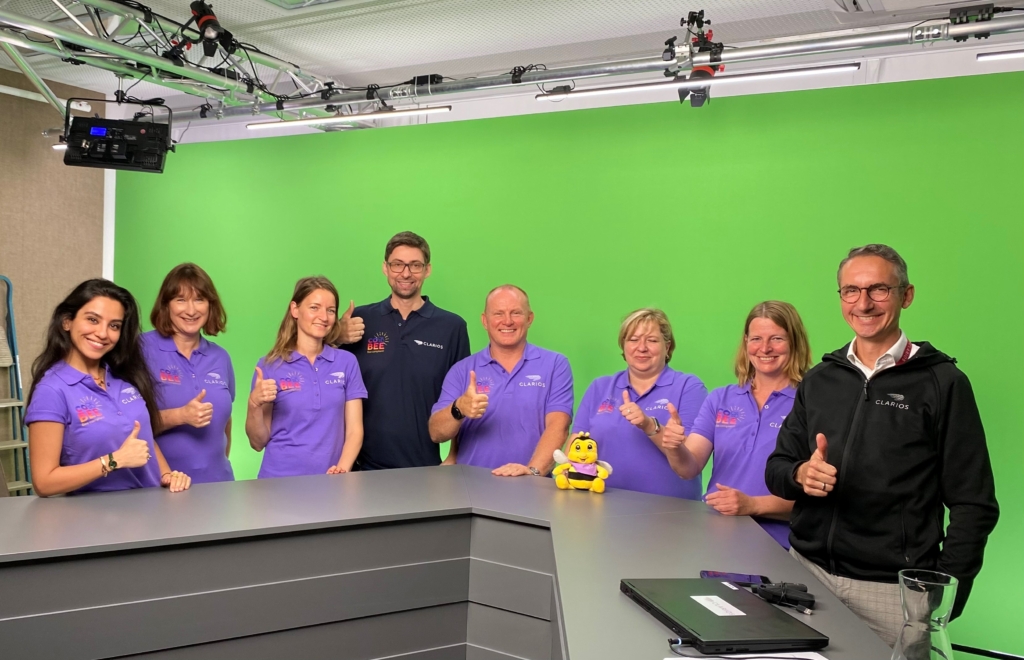
This requires me and my team to relinquish some measure of control. The way we approach it is, we provide them with oversight, guidance, and governance. But they’re allowed to make the program their own. And they do! They are incredibly engaged and incredibly creative. Our European compliance team that decided to do a compliance day in their region, so they planned it, implemented it, and did it completely on their own. I found out about it after they were almost done with the planning. They made a mascot (the “Co-Bee”), they did videos… all kinds of great stuff. It was amazing. The way took it and they owned it shows how our business truly incorporates ethics and compliance into what they do. They view it as critical to their business and own it in their region. To me, that’s foundational to our success, and it’s really the engine that powers our program. I am so inspired by their creativity, their engagement, and their commitment to the program.

The EMEA Compliance Team gathers in the studio as part of its Compliance Day event.

What is the name of this particular role?

There are a variety of roles, but collectively we refer to them as the Regional Compliance team. There are Geographic Program Leaders, or GPLs, that are sort of the mini-compliance officer for the region. They head up the program in their region. And then in our five main risk areas that we focus on, we have regional leaders for each one of those. So every region has six individuals who have a direct role to play in ethics and compliance.

Then those five risk areas also have a global leader. The folks in the region meet regionally, but they also meet with their workstreams vertically with their colleagues in other regions of the world who are focused on the same area that they are. There’s a matrix of communication and regular engagement. It’s a great way for us not only to support compliance within those regions, but to also leverage the best practices and the creativity that that they demonstrate.

Remember that example of our team in Europe doing the Compliance Day? That was so well received and got such great feedback that it inspired other regions to do it. Latin America did it, Asia is doing it, and so is the U.S. They’ve all seen what Europe did, and they’re all putting their own spin on it. Latin America did it as a Compliance Week. EMEA did it in a single day. They developed it based on what works in their region, because every region is different.

You mentioned that these people are not paid for this particular kind of work, but they are often picked for it based their past performance as high value employees. Does the work they do for this factor into their annual review?

Not formally, but we encourage all of our regional team members to add that into their performance plans for every year, and they get evaluated on it. The interesting thing is our regional compliance program is not overly structured. It’s not like there’s a two-year term and then you have to rotate out. It’s a bit more organic than that. What we find is that people rotate out of those roles because they’re getting promoted. And that’s a great thing, because now we’re seeding those individuals in leadership roles who have a deeper understanding of ethics and compliance. The more of them who get out there, the deeper ethics and compliance gets into the modality and the culture of our organization on a very intrinsic level.

This has been so effective for us that now other functions within the organization are emulating it. ESG has emulated our structure. IT Security has emulated our structure. They want to do what ethics and compliance is doing, and they’re all building these networks of employees within the organization who are helping to support their particular function or area of focus.

Why is earning the World’s Most Ethical Companies distinction so important to Clarios?

Getting the World’s Most Ethical Companies recognition this year is a really important external recognition of what we already know about our company: that our values drive our results, and that principled is the first value we have. It goes through everything that we do. It’s a direct result of the commitment of all of our employees across the globe, and all of our leaders who support this by talking about it with their teams every quarter.

I highly recommend that companies go through the World’s Most Ethical Companies application process. Even if you don’t achieve the honor, going through that benchmarking and seeing where your program stacks up against those that are considered to be at the top of their game is a fantastic way to gauge the things that you need to focus on, or that you might want to consider for your program.

For us it has spurred really substantive discussions with leadership on areas that we could improve on, and that we could better align with best practices. So, it’s a very valuable process.

This is a comprehensive evaluation, it’s not just about the ethics and compliance program. Recognizing that and understanding that we need to engage with our other stakeholders in the business, early on in the process, has also been incredible valuable to us. And I would definitely recommend that anyone who’s applying does that, because it provides visibility into parts of the organization that we may not engage with regularly. When we connect with them, we get an understanding of what we’re doing more holistically than just within our own functional silos.

The other advice I would offer is to make sure to allow yourself enough time to ensure that you’re able to provide the most fulsome answers possible. When we first applied it was like a scramble, and in retrospect, we realized we could have done it a lot better. You learn as you go that there’s a cadence to this. Don’t wait till the last minute, because there’s all the documentation that is required. Make sure that you’re giving yourself enough time to provide the best answers that are most representative of what your company does, which may not be what you immediately think it is. That’s what I’ve learned.

I usually like to give us about two to two and a half months. As soon as the application window opens, I pull the team together and send the Ethics Quotient to everybody and give them a certain amount of time to get their sections done. That gives me maybe three weeks on the back end to pull everything together, review, make sure we’re not missing anything. It also gives me time to do some interviews with key folks like our Chief Sustainability Officer, or a VP of Communications, on some of the things that they’re doing in their respective spaces, and then pull together all of that documentation.

I will say, the process this year was significantly easier than it has been in previous years, with the documentation being in line with the questions. That was very valuable and made things a lot easier. We were done about a week early because of that.

Why are you personally excited that Clarios has earned the World’s Most Ethical Companies honor?

We’re only four years old. Getting that external recognition is incredibly validating, and it not only helps validate what we’ve been saying internally to leadership and our Board of Directors, but it also gets our employees excited about it. Even beyond the corporate headquarters. Folks in the regions, I had to tell them to embargo the news that we had gotten the honor because they were so excited to share it with their own leadership team and employees.

We’re not a company that you necessarily recognize by our brand because we’re under the hood of your car, and often times, our products are privately labeled, especially in the U.S. But our employees are really proud to work here, and I think this honor gives people a sense that Clarios really delivers on our values, and that we are really striving to be that kind of company for our employees, customers, and stakeholders, that we aspire to be.

I am so excited and proud of what our what our teams have accomplished. Now, we’ve got to make sure we get it every year from this point on. The bar is raised, so we have to make sure that we keep continuing to improve the program, and not take our foot off the gas.

ABOUT THE EXPERT

Deborah Spanic is the VP and Chief Ethics and Compliance Officer for Clarios, the world’s largest automotive battery manufacturer. She is an expert in compliance program development and management, ethical leadership, process excellence and innovation, and regulatory and legal compliance.