4 Minutes - Read Now

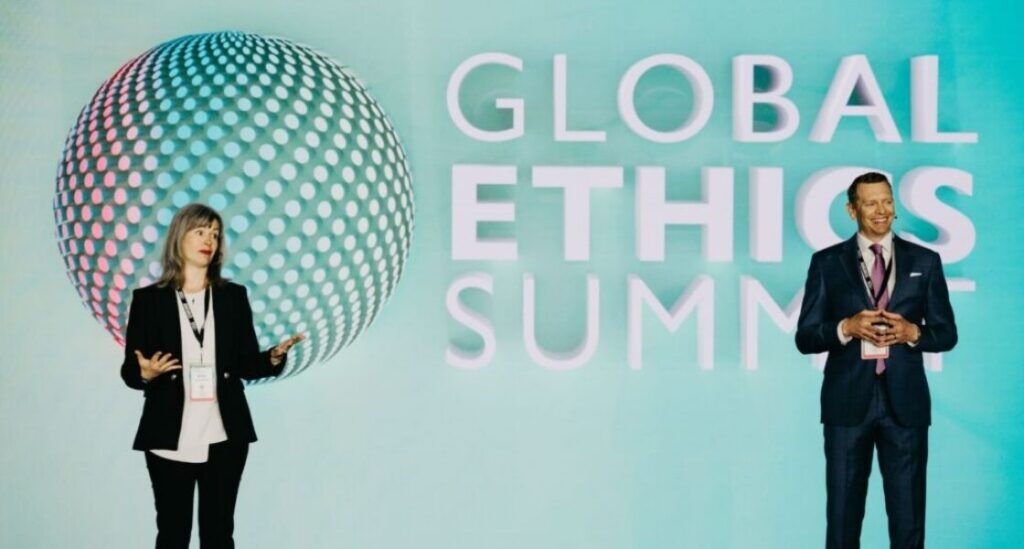
If you lead ethics and compliance at a large organization, conferences are not a “nice to have.” You go because you need sharper judgment, better benchmarks, and ideas you can defend to leadership and the board. The Global Ethics Summit (GES) delivers on that need.
If this is your first GES, or you are deciding whether it is worth making the time to attend, here is what to know and how to get real value from the experience.
What is GES?
GES is Ethisphere’s annual, practitioner-led ethics conference for senior ethics and compliance leaders from large, complex organizations. This year’s event runs March 29–31, 2026, in Atlanta, GA, with a hybrid option for virtual attendees.
You will be in the room (or online) with Chief Ethics and Compliance Officers, General Counsel, and senior program leaders who are dealing with the same pressures you are: proving program effectiveness, strengthening ethical culture, engaging the board, and navigating emerging risks.
Who should attend?
GES speaks to for senior leaders who own outcomes. If you are accountable for the ethics and compliance program in a global or highly regulated environment, and you regularly brief executive leadership or the board on your business integrity efforts, then this event is for you.
First-time attendees often include:
- Chief Ethics and Compliance Officers and Chief Compliance Officers
- General Counsel and Deputy General Counsel
- VPs and Directors of Ethics and Compliance
- Senior leaders overseeing investigations, culture, third-party risk, and governance
What the Summit feels like (and why it works)
First-timers often notice how intentionally the GES agenda focuses on practical, actionable insights. Sessions go beyond soundbites and get into the “how” of impactful best practices that manage E&C risk and build organizational value.
Expect a mix of:
- Plenary conversations with senior leaders and experts
- Longer breakout sessions (often 90 minutes) that allow for depth and discussion
- Peer-to-peer conversations in smaller groups, designed for candid, high-trust exchange
- Hands-on workshops aimed at practical takeaways you can use back at work
- Programs in Action sessions where companies walk through what they actually did, what worked, and what did not
What makes GES different
Peer-to-peer comes first. Many sessions provide closed-door, facilitated conversations with limited attendance. This provides attendees with an ideal environment to pressure-test their approach, compare notes with peers, and speak frankly about what works and what doesn’t.
Real programs, not hypotheticals. “Programs in Action” focuses on execution in areas leaders actively wrestle with, like board reporting, speak-up culture and retaliation prevention, manager enablement, AI use in investigations and monitoring, and third-party risk management.
Hybrid attendance is real attendance. Virtual participants can access plenary sessions and select breakout content with live interaction options, so remote attendance is not just watching a stream. You are definitely part of the program.
How to plan your first GES
Scan the agenda early. Some sessions require pre-registration, especially peer-to-peer conversations and workshops. Pick what aligns to the issues you are solving right now, not what sounds interesting in theory.
Commit to at least two “active” sessions. It’s a good idea to attend at least one peer-to-peer conversation and one workshop. Those tend to produce the most immediately usable insight.
Protect networking time. The informal conversations in breaks, meals, and receptions are where you often get terrific insights and ideas from your fellow practitioners. There is no competition in compliance, and you definitely see that at GES, with fellow attendees looking to share what they know. Build space for that on purpose.
Is it worth it?
If your job requires you to show program effectiveness, advise leaders during uncertainty, and stay ahead of risks like AI, retaliation, and third-party exposure, GES is designed to be time well spent.
You should leave with clearer benchmarks, stronger perspective, and ideas you can apply quickly. For many E&C professionals, GES isn’t just a great ethics and compliance conference; it positions them for success over the rest of the year.
“I attended with a colleague and we agreed that we were glad we stepped away from our day job to be at the conference and immerse ourselves in the E&C info at hand,” she said. “This was my first time at this conference. It was very well done, and I learned a TON! I hope to return again next year!”
– Angela Bohlen , Duke Energy
To review logistics, agenda details, and registration options, visit AttendGES.com.
Author Bio

Bill Coffin | Editor-in-Chief, Ethisphere Magazine, Ethisphere
Bill Coffin is the Editor-in-Chief of Ethisphere Magazine and supports the larger content strategy of Ethisphere. He is an internationally recognized writer and editorial leader in the fields of ethics, compliance, insurance and risk management. His work has appeared in The Wall Street Journal, BusinessWeek, Forbes and Fortune, as well as Compliance Week, National Underwriter, Risk Management, Best’s Review and other B2B media. Previously, Bill served as Director, Senior Editor at AIG, leading content strategy for one of the world’s largest insurance companies.