8 Minutes - Read Now

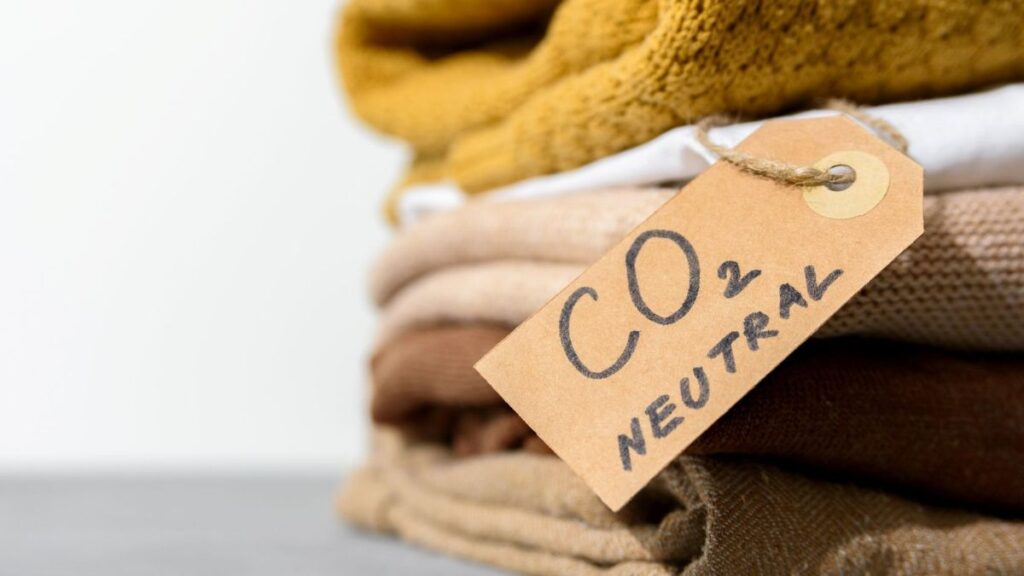
Since Sept. 27, 2026, businesses marketing products and services to EU consumers have faced stricter rules on claims such as “carbon neutral,” “climate neutral,” and “carbon positive.” Companies can no longer describe a product or service as having a neutral, reduced, or positive greenhouse gas impact when that claim relies on offsetting emissions outside the product’s value chain.
The rules don’t amount to a universal ban on the words “carbon neutral,” but they do change how EU carbon neutral claims can be made and substantiated. Businesses selling into the EU that haven’t yet reviewed their packaging, websites, advertisements, and product information are now behind.
Is “Carbon Neutral” Banned in the EU?
Not outright, but as with many sustainability regulations, the answer is more complicated than a simple yes or no.
The changes come from the EU’s Directive on Empowering Consumers for the Green Transition, known as Directive (EU) 2024/825. The directive became part of EU law in March 2024. EU member states had until March 27, 2026, to write it into their national laws, and the new rules took effect on Sept. 27, 2026.
Not every country met the first deadline. In May 2026, the European Commission opened infringement proceedings against 20 member states for failing to notify full transposition, and several were still finalizing their laws into the fall. That gives businesses little cover. National consumer authorities can pursue misleading environmental claims under existing unfair commercial practices law, and the specific bans apply as each country’s law takes effect.
The directive amends the Unfair Commercial Practices Directive by adding several greenwashing practices to the list of practices prohibited in all circumstances. One of them is claiming, based on greenhouse gas offsetting, that a product has a neutral, reduced, or positive impact on greenhouse gas emissions.
Under EU consumer law, a “product” can be a good or a service. The prohibition therefore reaches offset-based claims such as:
- “Carbon-neutral delivery”
- “Climate-neutral flight”
- “Carbon-positive product”
- “CO₂-neutral service”
- “Climate compensated”
- “Net-zero product”
If one of these claims depends on buying carbon credits or supporting projects outside the product’s value chain, it’s prohibited. Neither the quality of the credits nor independent certification lifts that restriction.
What Changed for Carbon Neutral Claims?
The EU’s greenwashing rules changed carbon messaging in three ways.
1. Offset-Based Product Claims Are Now Prohibited. A business can no longer calculate the emissions associated with a product, purchase an equivalent quantity of carbon credits, and then market the product to consumers as “carbon neutral.”
Businesses can still finance carbon projects. The directive allows companies to communicate investments in environmental initiatives, including carbon-credit projects, where that information is accurate and not misleading.
A company could, for example, explain how much it invested in a verified carbon-removal project. It can’t turn that investment into a claim suggesting that buying or using its product has no climate impact.
2. Generic Environmental Claims Face a Higher Threshold. The directive also prohibits generic environmental claims where a business can’t demonstrate recognized excellent environmental performance relevant to the claim. The European Commission’s 2026 guidance on the directive indicates that standalone terms such as “carbon neutral,” “climate neutral,” “carbon compensated,” and “carbon positive” can be generic environmental claims.
Recognized excellent environmental performance has a specific meaning. It generally refers to the EU Ecolabel, officially recognized EN ISO 14024 Type I ecolabeling schemes, or top environmental performance under other applicable EU legislation. A general assurance or carbon-neutrality certificate may not meet this test on its own.
Instead of relying on broad language, businesses should look at whether they can make a specific, substantiated statement explaining:
- What has been measured
- The scope and period covered
- What has legitimately been reduced
- The methodology and baseline used
- Whether carbon credits are involved
- Where supporting evidence is available
Adding more detail doesn’t make an environmental claim compliant on its own. The claim must also be accurate, supported by verified and current evidence, and presented in a way that doesn’t mislead consumers about the nature or scale of the environmental benefit.
3. Future Claims Now Require Verified Plans. Claims about future environmental performance, including commitments to become carbon neutral or net zero by a particular date, must rest on clear, objective, publicly available, and verifiable commitments.
Businesses need a detailed and realistic implementation plan with measurable, time-bound targets and the resources required to deliver them. An independent third-party expert must verify progress regularly, and consumers must be able to see the findings.
A statement such as “We will be carbon neutral by 2030” can’t stand as an unsupported aspiration. It needs a defined emissions boundary, interim targets, allocated resources, and evidence of progress.
Can Businesses Still Make Life Cycle Carbon Claims?
Yes. The offsetting prohibition doesn’t apply where a neutral, reduced, or positive claim rests on the actual life cycle impact of the product within its value chain. The claim must still comply with other requirements under EU consumer law.
A thorough life cycle assessment (LCA) can establish the emissions associated with raw materials, manufacturing, distribution, use, and end-of-life. That evidence may support a specific claim about reduced product emissions or performance against a defined baseline.
For example, “This product has 30% lower cradle-to-gate greenhouse gas emissions than its 2023 equivalent” tells consumers more than “low-carbon product.” It would still require a consistent comparison, credible methodology, current evidence, and a clearly explained scope.
Completing an LCA doesn’t automatically make every environmental statement acceptable. The wording must reflect the assessment’s findings accurately, without exaggerating the benefit.
Does ISO 14068 Still Have a Role?
ISO 14068-1 remains a valuable framework for managing and demonstrating carbon neutrality. It sets a hierarchy that prioritizes greenhouse gas reductions before the use of high-quality carbon credits, and it requires transparent reporting.
Following ISO 14068 doesn’t override EU consumer law, though. A business may use the standard to structure its carbon management program and still need to rethink how it presents the achievement in consumer-facing marketing.
Businesses face two separate questions. First, has the organization followed a well-substantiated process to measure and reduce emissions and address any residual emissions, such as through ISO 14068? Second, does the law allow it to communicate the outcome as a “carbon neutral” claim? Even where the underlying process is sound, a business can’t market a product or service as carbon neutral to EU consumers if that claim relies on carbon credits outside the product’s value chain.
Do the Rules Apply to U.K. Businesses?
The directive applies to business-to-consumer marketing within the EU Single Market, including relevant products and traders originating outside the EU. U.K. businesses selling goods or services to EU consumers should therefore review their EU-facing communications.
Business-to-business commercial practices sit outside the harmonized scope of this directive, although other EU and national advertising rules may still apply. Businesses operating in Great Britain must also continue to follow the Competition and Markets Authority’s Green Claims Code, which requires environmental claims to be truthful, clear, and substantiated. Since April 2025, the authority has been able to fine businesses directly for breaching consumer law, with penalties of up to 10% of global turnover.
What Should Businesses Do Now?
Businesses should review more than product packaging. Carbon claims can appear across websites, retailer listings, advertisements, brochures, social media, sustainability labels, and product names.
A practical review, whether it’s a first pass or a check on work done before the deadline, should include:
- Create an inventory of carbon claims. Identify uses of “carbon neutral,” “climate neutral,” “carbon positive,” “net zero,” and similar terminology across EU consumer touchpoints.
- Establish what each claim covers. Separate product claims from company-level statements and current achievements from future targets.
- Identify the role of offsetting. Determine whether a claim relies on carbon credits outside the product’s value chain.
- Review the evidence. Check assessment boundaries, methodologies, comparisons, verification, and the age of the data.
- Use specific evidence. Where appropriate, communicate measured reductions and progress against a defined baseline instead of using an unqualified headline claim.
- Review existing packaging. The Commission’s guidance indicates that the rules also apply to products already in the distribution chain. Businesses still holding stock with non-compliant claims may need to cover or correct them.
- Introduce a claim-approval process. Sustainability, scientific, legal, and marketing teams should review environmental messaging together before publication.
- Track national enforcement. Penalties and enforcement approaches vary by member state, and some countries finalized their laws late. Check the rules in each EU market where the business sells to consumers.
The Bottom Line
The rules still leave businesses plenty of room to talk about climate action, as long as they do it with more precision.
Measured reductions, transparent life cycle boundaries, credible transition plans, and clear disclosure of carbon-credit investments can make a stronger sustainability case than a broad claim of neutrality.
Author Bio

Ellis Clark | Head of Marketing, Tunley Environmental, Guest Contributor
Ellis is the Head of Marketing at Tunley Environmental, responsible for overseeing all aspects of the company’s marketing strategy and execution. Tunley Environmental supports organizations with carbon assessments, life cycle assessments, ISO 14068, and science-based green marketing reviews. Tunley Environmental helps businesses assess the evidence behind their environmental claims and translate technical findings into transparent, verified communications that meet green claims regulations.