6 Minutes - Read Now
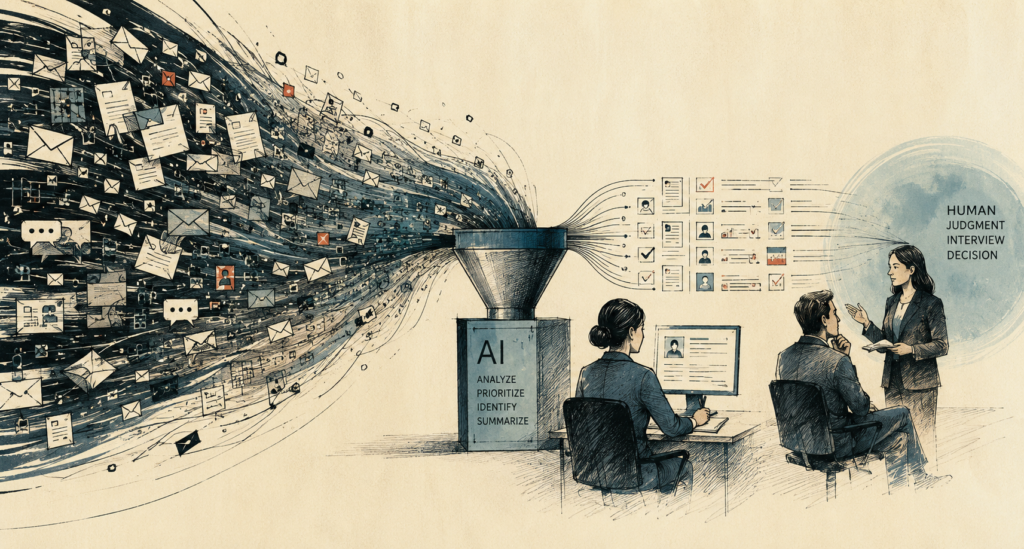
On July 22, I spent the morning running a fake investigation, as part of a hands-on session the Business Ethics Leadership Alliance (BELA) hosted with Epiq called “Inside the Investigation: A Hands-On AI Workshop for Compliance Leaders.” Instead of watching a demo, everyone in the room worked a case. Epiq’s team, led by Jerry Kral, co-lead of the company’s Compliance Advisory & Technology practice, along with Erin Toomey, vice president and managing director of Epiq’s Global Investigations Practice, and Jaye Wright, an eDiscovery consultant, handed us a fictitious hotline complaint and a closed data set of roughly 20,000 emails, texts, and transcripts.
The scenario: an anonymous hotline tip alleging a conflict of interest involving a manager. Our job was to build an investigative brief ahead of first interviews scheduled for one week out. Using Epiq Discover™, the company’s eDiscovery platform, and Epiq Assist™, its AI investigative assistant, we each worked our own angle into the complaint, chasing whatever thread the data suggested.
By the end of roughly two hours, everyone in the room had identified interview subjects, built a chronology of events, and drafted actual interview questions. Then Epiq threw a curveball: an investigation committee wanted a briefing in 24 hours. We used the same tools to produce a one-page summary and a four-sentence version short enough to fit on a slide. Watching a room of compliance professionals go from raw data to a defensible narrative that fast was the most convincing part of the morning.
Why investigations are the right place to start
Ask any investigator what the job actually involves and you’ll hear some version of the same complaint: too much material, too little time, and a clock that starts ticking the moment someone calls the hotline. The person who raised the concern doesn’t see the mountain of documentation the team has to work through to get the facts right. They just know they felt strongly enough to report something, and in their mind, that should mean a fast resolution. Meanwhile the organization can’t move fast without moving carelessly. And the only thing worse than a slow investigation is a rushed one. Get it wrong and you either clear someone who shouldn’t be cleared or punish someone who didn’t do anything.
That mismatch, between the speed people expect and the thoroughness fairness requires, is where a lot of compliance programs lose credibility. The team can do everything right and still watch the process take long enough that the people involved stop trusting the outcome before it even arrives. That erosion of trust is often the real cost of a slow investigation, more than any specific finding.
The numbers Epiq shared put a scale on that problem. Investigation volume is at an all-time high, up 5% year-over-year. Enterprise data volumes are growing 35% annually, partly because meeting transcripts and chat logs are becoming standard evidence alongside email. Median cycle time rose 33% between 2024 and 2025. Investigations still average 69 days in Europe and 56 days in Asia-Pacific, against 19 days in North America, and even that lower number is too long by most standards. On top of all that, 85% of compliance professionals say their jobs have gotten more complex over the past three years, usually without more people or budget to handle it.
Put those together and the picture is a profession asked to do more, faster, with less, while the pile of data it has to read by hand keeps growing every year. Pure hustle doesn’t close that kind of gap. (If it did, E&C teams would have closed it by now.) But different tools do.
What AI actually changes
This is where AI really earns its place in the conversation. Watching an AI assistant pull a chronology out of 20,000 documents, flag related threads across emails and interview notes, and draft a witness list in minutes made the case better than any slide could. The tool didn’t replace judgment. It cleared away the volume of grunt work that used to consume most of an investigator’s week, so people could spend their time on the parts that actually require a human: deciding what a fact pattern means, weighing credibility, and figuring out what to ask a witness and how to ask it.
While speed may be the most visible benefit, the most meaningful one is consistency. A process that works the same way every time, regardless of who is involved, builds more trust than a process that just moves quickly, because most people only see it once, when it’s their complaint or their name attached to it. What compliance teams need, and what AI tools are starting to deliver, is certainty: when someone calls the hotline, the system built to respond actually responds, and does so fairly.
That same logic extends past investigations. Third-party due diligence has a similar mountain of documents, a narrow window to act, and a significant cost to getting it wrong in either direction. Anywhere compliance work depends on finding the signal inside a huge, messy pile of data under a deadline, this kind of AI assistance has a role to play. Investigations were the sharpest example on display this week, but they’re one piece of a broader shift already underway across ethics and compliance, one that touches how organizations screen vendors, monitor policy exceptions, and track remediation across a case load that never seems to shrink.
Where this leaves compliance leaders
None of this argues for handing investigations over to a machine. Rather, it argues for handing the machine the parts of the job that were never really about judgment: finding documents, building timelines, drafting first-pass questions, checking whether a claim in one email matches the timeline built from 12 others. When investigators get to spend their expertise where it belongs—on the calls only a person can make—then they also get to focus on the part of the job that drew most of them into ethics and compliance in the first place.
These things continue to evolve rapidly, however. Case in point: Many platforms like Zoom and Teams not only feature Ai transcription, but now default to recording and transcribing every meeting, which quietly turns opt-in consent into an opt-out exercise unless someone actively changes a setting. Whether that’s acceptable depends heavily on jurisdiction, and it’s a live question for any organization running investigations across borders. It shouldn’t slow AI adoption. It should start a governance conversation compliance leaders need to have now, before the defaults get set for them.
Still, we now live in a world where in just about two hours, a room full of people who used an AI assistant they had never seen before, had subjects lined up, a working chronology, and real interview questions ready to go. It’s a real preview of what an investigation can look like once the technology finally matches the scale of the problem it’s meant to solve. Ethics and compliance teams have been asked to do more with less for years. It’s pretty exciting to see what it looks like when the catch up with the ask.
Author Bio

Bill Coffin | Editor-in-Chief, Ethisphere Magazine, Ethisphere
Bill Coffin is an internationally recognized writer and editorial leader in the fields of ethics, compliance, insurance and risk management. His work has appeared in The Wall Street Journal, BusinessWeek, Forbes and Fortune, as well as Compliance Week, National Underwriter, Risk Management, Best’s Review and other B2B media. Previously, Bill served as Director, Senior Editor at AIG, leading content strategy for one of the world’s largest insurance companies.