7 Minutes - Read Now

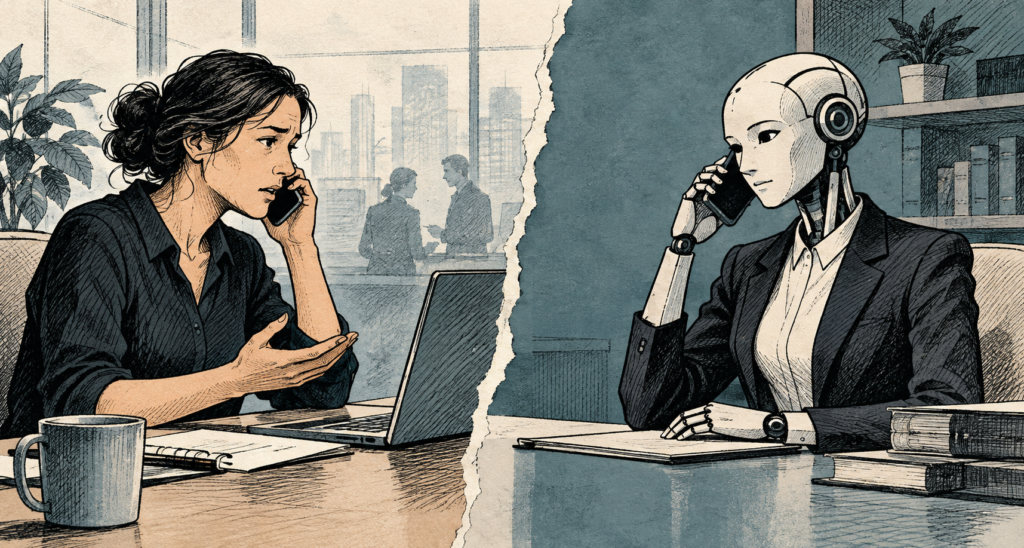
While, most ethics and compliance teams spent the last year hearing that they needed to use AI, employees started using it to report misconduct without asking anyone, and their reports are already sitting in investigators’ queues. So when I moderated our recent webinar on AI in hotlines and investigations, I wanted to move past the question of whether AI belongs in internal investigations. What matters now is where it helps, where it creates risk, and what has to stay human.
Billy Hughes, Chief Ethics & Compliance Officer at Ethena, ran investigations in-house at Fortune 500 retail and tech companies. Jess Beane, Program Manager, Compliance & Ethics at Databricks, has worked in the field for more than 15 years. Our audience turned out to be further along than Billy expected. In a live poll, 36% said they use AI for specific investigation steps, 32% are experimenting informally, and 15.5% have built it into their process. Only 17% aren’t using it yet.
Treat AI Like an Intern
Jess’s team at Databricks built a multi-layer agent in-house that supports a case from intake through close and post-close. In Billy’s experience, AI fits best with high-volume, lower-risk work: summarizing the pile of Teams messages, screenshots, and recordings in a new case, keeping a timeline current, drafting interview outlines, translating, and writing the first draft of the investigation report.
“We consider AI an intern,” Jess said. “It is our intern, always available.” You never pass off what it hands you as finished. Her advice is to argue with it. Ask why it reached a conclusion, and revise until the result is your own work product.
Jess was told AI would make her work faster and easier. Instead, it changed how she spends her time. She no longer writes first drafts, and as she put it, “It takes a lot less time to revise a draft than it does to draft from scratch.” New investigators also train faster, because templates and playbooks live inside the AI workflow.
Machine-Written Doesn’t Mean False
About 60% of attendees said they’d received at least one ethics hotline report they believed was written with AI, and more than a quarter weren’t sure.
Both panelists see AI-assisted reporting as mostly good news. It helps people writing in a second language, and some find it easier to tell a chatbot about something painful than to tell a person. “I want more reports,” Billy said. “We can’t fix what we don’t know about.” Jess compared it to a friend asking her to review a complaint before sending it to HR. “AI is my intern,” she said. “On the flip side, AI is their friend.”
The downside Billy sees is reporters using AI to sound like a lawyer. Those reports carry legal buzzwords and cite regulations an employee would have no reason to know, with less detail about what happened or how it felt. “I get a lot of what sounds like an opening argument in a case,” he said. At a former employer, Billy received a 15-page, clearly AI-generated report alleging harassment and discrimination. He brought in the head of labor and employment right away, without assuming anything about where the case would go, and he tries to remember that “machine-written doesn’t mean false.”
That makes the reporter interview more important than ever. Billy recommends pressure-testing individual details to see whether the reporter can explain them the same way. Jess flagged a newer risk. In a mock interview, she had an AI tool on her phone feed her answers, and it worked. Her fix is the one investigators have always used for a suspected second person in the room: pause, ask directly whether someone or something is supplying answers, and stop the interview if you need to. She also wants that approach written into the investigations SOP so every investigator handles these reports the same way.
Walk the Case From Intake to Close
When I asked Billy to walk us through a case from start to finish, he began at intake, where he expects AI chat to replace the web form. Employees already work in a prompt box, and someone reporting a stressful incident shouldn’t have to hunt through a drop-down for the right category.
At triage, AI can split a long report into separate harassment and conflict-of-interest cases and flag safety threats for immediate attention. Connected to the HRIS, it can map managers and likely interviewees, work that once cost Billy hours of clicking through Teams.
Evidence review is where AI has helped Jess most. She once worked a travel and expense case with about 40 expense reports, each holding roughly 10 receipts. She reviewed a sample and found enough to substantiate the allegations. Today she’d have AI review every one, ignore the $4 bagel, and look for patterns like dinners with friends and family or expenses filed during a leave of absence. A $2,000 finding and a $40,000 finding lead to different clawback conversations, and a larger fraud raises the question of going to the authorities. Those calls belong to the investigator, the business, and executives. “That is not an AI question,” Jess said.
At closing, a skill that formats every report with a standard executive summary and timeline makes the investigator “the editor rather than the drafter,” as Billy put it. After closing, AI can’t detect retaliation, because that comes from talking to people. It can make sure the 30-, 60-, and 90-day check-ins with reporters happen, and Jess noted it can flag a policy that has produced three unsubstantiated cases and may need a rewrite.
Where They Draw the Line
Jess uses AI to draft interview outlines beforehand and summarize notes afterward, but she never uses AI to conduct an investigation interview itself. Reporters cry and subjects argue, so the interviewer must remain human. “Can you build a bot to do this? Sure, you absolutely can,” Jess said. “I don’t think that you should.”
Billy doesn’t favor AI note-takers either. The pop-up that announces when an AI has joined a conversation makes things more contentious and more frightening. “It’s just another example of making a stressful situation even more stressful,” he said. Substantiation and discipline stay human, too, even at companies with a disciplinary matrix.
Jess insists on enterprise tools, never personal accounts, so evidence stays secure and out of model training. On privilege, she treats AI output as her own work product at the direction of counsel and brings the lawyers in early.
Billy urged teams to push their hotline and case management providers for AI built into the workflow. His first in-house AI workflow meant copying case files to his desktop for Copilot to summarize, then pasting the output back into the case system. “I don’t think that’s good enough,” he said.
Start Small
I closed by asking where a small team with no budget should start. Billy pointed out that most already have an enterprise AI tool. He’d begin with a strong investigations SOP and handbook, because any future AI workflow will run on a well-documented process. Jess’s advice was to start small. “Anything that you do more than once, it should be supported with AI,” she said. Have AI draft your interview outline with your format, rapport-building questions, and Upjohn warning built in.
AI won’t take your job, Jess said, but you’ll work differently. Use it, argue with it, and make the output your own. In her words, “Don’t be a digital paper pusher.”
To hear the full conversation, watch Putting AI to Work in Hotlines and Investigations: A Practical Guide for E&C Teams on demand.
Author Bio

Bill Coffin | Editor-in-Chief, Ethisphere Magazine, Ethisphere
Bill Coffin is an internationally recognized writer and editorial leader in the fields of ethics, compliance, insurance and risk management. His work has appeared in The Wall Street Journal, BusinessWeek, Forbes and Fortune, as well as Compliance Week, National Underwriter, Risk Management, Best’s Review and other B2B media. Previously, Bill served as Director, Senior Editor at AIG, leading content strategy for one of the world’s largest insurance companies.