7 Minutes - Read Now

For the last two years, AI has shown up in nearly every conversation in ethics and compliance. E&C teams have written the governance frameworks, vetted the tools, and answered the Board’s questions. Some have put AI to work inside their own programs. Many haven’t started. And more than a few practitioners would be happy to go a whole week without hearing the acronym at all.
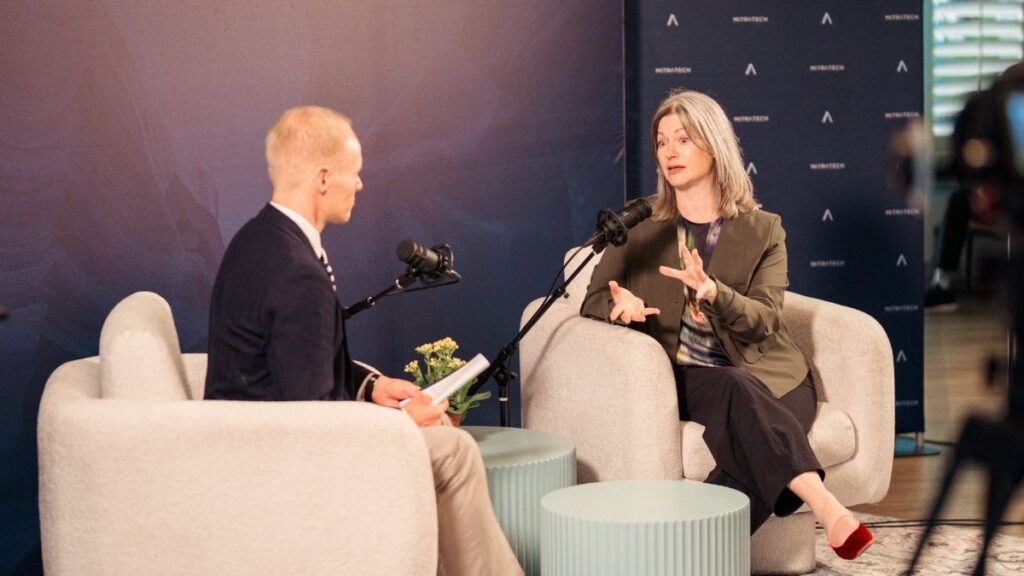
That’s the backdrop for the 2027 Global Ethics Summit, Ethisphere’s 18th annual gathering of ethics and compliance leaders, taking place March 30–April 1 in Atlanta and online. Part of my job is deciding what goes on the Summit agenda, and I recently gave Ethisphere Editor in Chief Bill Coffin an early look at it on the Ethicast. Our theme this year is Human-Centered, AI-Assisted. It keeps people at the center of the work and gives the technology a supporting role. Plenty of this year’s agenda has nothing to do with AI at all.
It’s Still About People-Created Risk
Every conversation about this year’s theme starts with people-created risk. As my colleague Bill Coffin likes to say, people are going to people, and they’re still peopling. That holds whether an employee picks up the phone to call a client or hands the drafting of every client email to an AI agent.
What makes this moment interesting for compliance leaders is that AI brings its own distinct risks and also shifts risk across many other domains. Our policies, processes, and controls were built around specific failure points and weak spots, and those are moving because roles and jobs are moving. People still take direct action, but now they also act through agents. A company with 10,000 employees has 10,000 employees times however many agents each of them has deployed. That changes the risk picture in seismic ways.
Compliance teams also find themselves in an unusual spot. Under the Three Lines Model, compliance builds the support mechanisms that let the business own and manage its risk. With organizations encouraging AI use everywhere, compliance teams and their control partners are putting these tools to work in their own jobs, too. They’re building the guardrails and learning to work inside them at the same time.
Putting AI Back in Context
AI has dominated the past 24 months, and I know a lot of people are tired of hearing about it. Our response for 2027 is to put AI back in perspective. Sessions won’t revolve around lists of use cases or how to pick a model. They lead with the state of a risk area, or with best practices and emerging trends in a particular part of the program, and treat AI as one factor inside that larger picture.
Room for Every Level of AI Maturity
Talk to enough E&C leaders and you’ll hear about AI maturity at every point on the spectrum, from almost no use to advanced adoption. Two sessions show how we’re building an agenda that works across that range.
The first looks at how AI governance has to evolve. You can’t build a governance model for AI and expect it to hold. There’s no “set it and forget it,” and no “set it and revisit it every couple of years.” You need a process around the model that keeps it adaptable, so it can adjust as fast as the technology does and as fast as your people adopt it. That applies to an organization writing its first AI policy and to one that has been at it for years.
The second takes on accountability and defensibility. Who answers for what your AI agent does when it gets something wrong? You can’t blame the bot. The company is still responsible, no matter how many agents its people deploy. So what’s the audit trail? Where’s the record of decision-making? Can you defensibly reconstruct what the technology did and why? Every organization needs answers to those questions, whatever its maturity.
The Human Side of the Agenda
If you want a break from AI, several sessions focus on the human side of the work.
One session returns to the ethical moments that keep speak-up human. People like to report their concerns to other people. Those person-to-person moments build culture and trust, and they drive the success or failure of a speak-up program. The session asks what those moments look like now and how to keep high-touch, human-to-human conversations happening.
Another rethinks the role of ethics champions. Technology now handles much of the information and data sharing champions used to carry, which raises a fair question about how to use them. Should they focus on making program concepts relevant at the business level? On storytelling and story sharing? We’re opening the door to reconsider what champions do and how they fit into the organization.
Board engagement has become a perennial topic for us, and it’s back on the main stage. It’s a moving target that shifts from year to year with the risk profile, the regulatory and enforcement environment, and the headwinds E&C leaders face when they justify their programs. It’s also a person-to-person subject, because it comes down to relationships.
Two Programs in Action sessions take the same people-first angle. If you haven’t attended the Summit recently, Programs in Action are company-led sessions where Business Ethics Leadership Alliance (BELA) member organizations walk through changes they’ve made in their own programs. They get into the nitty-gritty of how they made the changes, including who they partnered with and the hurdles they cleared.
BWXT will focus on culture and relationship building. How can a compliance team earn management’s trust and build a more candid working relationship with other business units? How does it adapt its approach to every site-level microculture without compromising standards or consistency? I see that session as a lesson in emotional intelligence.
GE Vernova will share how it’s redesigning its team for this moment, including how it thinks about upskilling junior staff now that AI handles many of the tasks that used to double as on-the-job training. Not many people are talking about this yet, and it affects a wide range of roles. How do we make sure people still build foundational skills and get the experiences that prepare them for their next role?
Room to Think Between Sessions
Attendees take in a lot as they move from session to session, and last year 90% told us they left with practical takeaways. This year we’re building in bigger breaks, especially for those of us on-site. Everybody needs a moment to pause and make some notes. Grab contact information for the Programs in Action presenter or the two panelists you want to follow up with. If you’ve had a good conversation over lunch, connect before you leave the table. We want people to take this in at a gut level, so nothing flies over their heads.
The conversation keeps going after the Summit, too. We’re building an archive of Summit content, including the panel conversations and written recaps, so you can go back, find the point you half-remember, and figure out who you want to reach out to. It also makes it easier to share what you learned with your team back home.
The 2027 Global Ethics Summit takes place March 30–April 1 at the Omni Atlanta Hotel at Centennial Park and online. Medium Early Bird rates of $2,795 for in-person attendance and $1,295 for virtual run through Dec. 16, 2026, and BELA member organizations are eligible for complimentary passes. See the agenda and register at attendges.com. I’m looking forward to seeing you in Atlanta.
To hear our full conversation, watch Human-Centered, AI-Assisted: Inside the 2027 Global Ethics Summit on the Ethicast.
Author Bio

Emily Rickaby, J.D. | Vice President, Content, Ethisphere
Emily Rickaby is VP, Content for the Business Ethics Leadership Alliance (BELA) at Ethisphere. In her role, she works with Ethisphere’s data and analytics team, members of the BELA community and other compliance and ethics professionals to foster collaboration and the sharing of best practices through the development of Ethisphere and BELA events, overseeing BELA working groups and directing the curation and publishing of relevant content resources and enhancing the BELA member hub experience in support of the BELA member community.