9 Minutes - Read Now
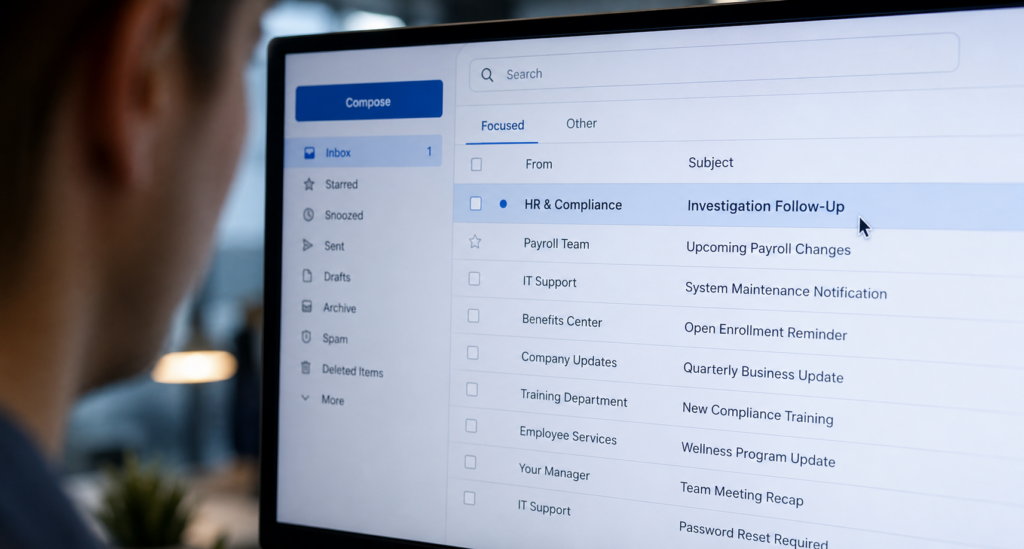
Ethics and compliance teams are under growing pressure to make investigations faster, more consistent, and more transparent. Leadership teams want to see functions use artificial intelligence where it can improve efficiency. Employees who raise concerns want timely answers and a clear sense that the process is moving. Investigators, meanwhile, still have to do the hard work of finding facts, protecting confidentiality, assessing credibility, documenting decisions, and treating people fairly.
That tension makes investigations one of the more promising use cases for AI in ethics and compliance. It also makes investigations one of the areas where poor implementation can create significant risk.
AI can help investigations teams move faster. It can support repetitive workflows, organize large bodies of information, help draft materials, and route incoming matters more efficiently. Used well, it can make parts of the process more repeatable and auditable, which can strengthen trust in the investigation itself. Used carelessly, it can introduce bias, obscure accountability, or create a false sense of precision in situations that require judgment.
The right question, then, is not simply how to train AI to support investigations. It’s to ask where AI belongs in the investigations workflow, and what controls need to surround it before an organization relies on it.
Start With the Investigation Workflow, Not the Model
Generative AI is often most useful where the work is repetitive, documentation-heavy, and governed by a defined process. Investigations often fit that description. They involve intake, triage, planning, interviews, document review, analysis, reporting, remediation, and recordkeeping. Many of those steps require judgment, but many also involve administrative or repeatable tasks that slow teams down.
That is where AI can play a useful supporting role.
Common use cases include:
- Note-taking and interview support, especially where approved tools can help organize meeting notes or identify follow-up items.
- Report drafting, where AI can help convert structured findings into a first draft for investigator review.
- Document review, particularly in matters involving large volumes of emails, chat records, policies, contracts, or other records.
- Matter triage, where AI may help route concerns to the appropriate team or identify issues that require prompt escalation.
- Pattern recognition, where aggregated case data may help teams spot recurring themes, locations, business units, or control gaps.
Each of these uses can reduce friction in the process. None should replace investigator judgment.
That distinction matters. AI may be able to summarize an interview transcript, but it should not decide whether a witness was credible. It may help identify relevant documents, but it should not determine the final factual record without human review. It may assist in routing matters, but it should not quietly downgrade serious allegations because of flawed assumptions in the model or its training data.
The safest starting point is to map the investigation process and identify where AI can support a human-owned decision. If a proposed use case moves AI from support into decision-making, the controls need to become much stronger.
Triage Is Promising, But It Needs Discipline
Triage may be one of the most attractive AI use cases for investigations teams, especially for organizations with high case volumes or multiple intake channels. When concerns arrive through hotlines, speak-up platforms, manager reports, HR referrals, audit findings, or other channels, routing them quickly to the right people can make a meaningful difference.
The opportunity is clear. A well-designed AI tool may help categorize matters, identify relevant policy areas, flag urgent issues, and reduce the time between intake and assignment. That can help employees see that their concerns are being handled with appropriate seriousness, and it can help the organization use investigative resources more effectively.
But triage is also where bias and misclassification can cause real harm.
If a model learns from historical case data, it may also learn from historical inconsistencies. If certain types of complaints were under-escalated in the past, the model may reinforce that pattern. If vague or emotionally worded reports are treated as less credible, employees who are already unsure how to report misconduct may be disadvantaged. If the system does not understand local context, language, culture, or power dynamics, it may miss the significance of a concern.
For that reason, triage tools should be tested against a clear standard: do they route matters faster and more accurately than the current process, without creating unacceptable risk?
That requires more than a vendor assurance. Teams should test sample cases, compare AI-assisted triage against experienced human review, review false positives and false negatives, and pay particular attention to matters involving retaliation, harassment, discrimination, conflicts of interest, fraud, senior leaders, or other high-risk categories.
AI can support triage, but the escalation logic must remain visible, testable, and subject to human override.
Bias Controls Cannot Be an Afterthought
Bias is one of the most important risks to address before using AI in investigations. The issue is not limited to custom-built tools. Many case management systems, speak-up platforms, and investigation technologies already include AI-enabled features. Compliance teams may be using AI sooner than they realize, simply because a third-party platform has embedded it into the product.
That means teams need to ask better questions of both internal technology partners and external vendors.
Before deploying an AI-enabled investigation tool, compliance leaders should understand:
- What data was used to train or tune the model?
- What bias testing has been performed?
- How often is the tool evaluated for accuracy and disparate impact?
- What human review is required before an AI-supported output affects an investigation decision?
- Can the organization audit how the tool categorized, summarized, or prioritized a matter?
- Are certain allegation types, employee groups, geographies, or languages more likely to be misread by the model?
- How is sensitive investigation data protected?
- Can the organization turn off specific AI features if they do not meet its standards?
These questions are not meant to slow innovation. They are what make responsible innovation possible.
Investigations depend on trust. Employees need to believe that if they raise a concern, the organization will handle it fairly. Subjects of investigations need confidence that decisions are based on facts. Leadership and the board need assurance that outcomes are defensible. Regulators, auditors, and other stakeholders may later examine whether the process was reasonable.
An AI-enabled investigation process that cannot explain itself will struggle under that scrutiny.
AI Should Make the Process More Auditable
One of the strongest arguments for AI in investigations is not just speed. It is consistency.
A mature AI-supported process can help teams create more repeatable workflows, better documentation, and clearer records of how matters move from intake to closure. That has real value. In many organizations, investigation quality depends heavily on the habits and experience of individual investigators. AI cannot replace that experience, but it can help standardize parts of the process around it.
For example, an AI tool may help ensure that reports follow a consistent structure. It may help identify missing information before a matter moves forward. It may summarize document sets in a way that helps investigators focus their review. It may help compare current matters with prior similar cases to support consistency in remediation or discipline, provided the comparison is used carefully and reviewed by humans.
The goal should be a process that is faster, more repeatable, and more auditable.
That means organizations should preserve records of when AI was used, what it produced, who reviewed the output, what changes were made, and how final decisions were reached. Those records should make clear that AI supported the process rather than controlled it.
This distinction will become more important as leadership teams ask compliance functions to use AI more aggressively. Efficiency is a legitimate goal, but it cannot come at the expense of procedural fairness. The organization should be able to show that AI helped investigators do their jobs better, not that it displaced the judgment the process requires.
Train the Team, Not Just the Tool
Training AI to support investigations also requires training the people who use it.
Investigators need clear guidance on approved tools, appropriate use cases, data handling, review obligations, and escalation points. They should understand where AI can help and where it introduces risk. They should also understand the limits of AI-generated outputs, including the possibility of inaccurate summaries, incomplete context, fabricated details, or overconfident conclusions.
That training should be practical. Investigators do not need a computer science seminar. They need to know how to use approved tools in real investigation workflows.
A useful training program should cover:
- What AI tools are approved for investigations work.
- What information may and may not be entered into those tools.
- Which tasks AI may support.
- Which decisions require human judgment.
- How to review and validate AI-generated outputs.
- How to document AI use in the case file.
- When to escalate concerns about accuracy, bias, privacy, or legal risk.
The more consequential the use case, the more important the training becomes. Using AI to help draft a report is different from using AI to route allegations. Using AI to summarize a document set is different from using AI to identify potential misconduct trends across a workforce. Each step closer to judgment requires stronger governance.
Keep the Human Accountable
AI can help ethics and compliance teams respond to one of the most persistent frustrations in investigations: why does the process take so long?
Anyone who has worked inside investigations has heard that question. Employees who raise concerns often want the organization to move quickly. Leadership wants efficiency. Investigators know that speed matters, but so do accuracy, fairness, confidentiality, and completeness.
AI can help relieve that pressure, especially when it supports tasks that are repetitive, document-intensive, or prone to administrative delay. It can help teams move faster while improving consistency,make the process easier to audit, and help investigators spend more time on the work that requires experience and judgment.
But investigations are ultimately about people, facts, and trust. That work cannot be handed over to a model.
The strongest compliance teams will approach AI with both ambition and discipline. They will look for real opportunities to improve the process, especially in note-taking, drafting, document review, and triage. They will ask hard questions about bias, accuracy, and vendor controls. They will train investigators on responsible use. They will document how AI supports the process. And they will keep humans accountable for the decisions that matter.
Author Bio

Erica Salmon Byrne, J.D. | Chief Strategy Officer and Executive Chair, Ethisphere
As Chief Strategy Officer and Executive Chair, Erica Salmon Byrne is responsible for ensuring continuous and strong growth for the company while maintaining Ethisphere’s founding ethos that good businesses do better.