
8 Ways to Elevate Ethical Culture: Measure Employee Awareness

AUTHOR:
Scott Stevenson, M.B.A.
Director, Culture Services
Ethical culture matters – to employees, investors, and communities. Companies that have strong values-based cultures are better places to work and well-poised for long-term success.
In this new series focused on sustainable culture change to mitigate people-driven risks, we look at the eight pillars of an ethical culture. Ethisphere defined these key elements with input from experts, ethics and compliance leaders from our Business Ethics Leadership Alliance (BELA), and also by considering guidance by international organizations and regulators. We distilled this into Ethisphere’s Culture Quotient (CQ) assessment, a survey that has been used by top global companies to determine employee perceptions of the organization’s culture of compliance. Through this work, we have insights from more than one million respondents representing the views of more than five million employees around the world.
Our eight pillars seek to get at the key metrics of a strong ethical culture: do your employees understand what is expected of them, do they know where to go if they have questions, and if they need help or have made a mistake, do they trust the process enough to ask for it?
Today’s post focuses on that first marker: do your employees understand what is expected of them.
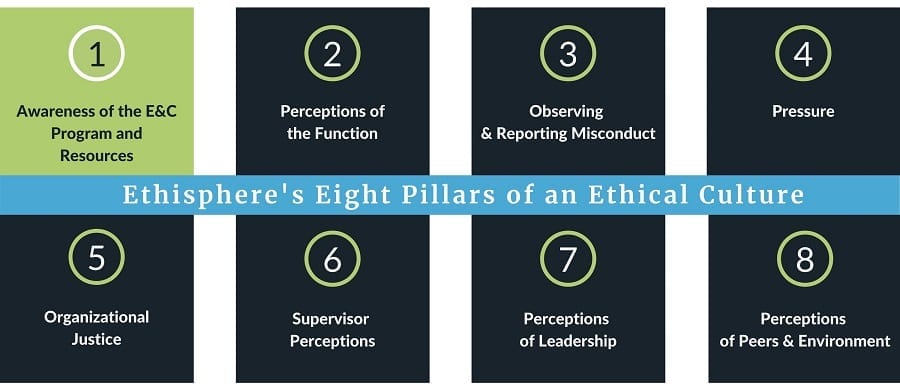
PILLAR ONE:
Awareness of the E&C Program and Resources
What it is we aim to measure:
Familiarity with the assets and efforts of the compliance and ethics function. In other words, do your employees understand the resources available to them? Can they find the code and applicable policies?
Types of questions in the assessment:
- I know where to find our Code of Conduct
- The company has clearly communicated ethical expectations to me
- I know how to report ethical concerns or observed misconduct
- The company has clearly communicated disciplinary guidelines to me, therefore I am aware of the consequences of misconduct
Why it matters:
Employee awareness of the E&C program and resources is at the heart of an Ethics & Compliance function’s success; it is important to know if it has the proper reach with the employee base. With demographic analysis, you can also tell where employees may be struggling to locate guidance and focus resources accordingly.
What the data says:
This is an area where companies tend to perform well, as a reflection of the amount of effort companies have put into developing and rolling out these aspects of their programs. For example, across the data set:
92 percent of employees know where to find the code of conduct.
93 percent of employees know how to report misconduct.
90 percent of employees believe their company follows its values.
Click here for the latest insights from our Culture Quotient data set.
How Ethisphere clients have used the data/insights:
As the data shows, most companies do well when it comes to employees knowing where to find E&C resources such as the code of conduct. However, deeper dives into the data typically expose areas where awareness is lacking. Upon knowing this information, companies can then fix the problem. For example, one company discovered that employees didn’t use an intranet because they viewed it as outdated and difficult to access. Another updated communications that weren’t translated into local languages.
Click here to learn about Sony’s insights and outcomes from benchmarking ethical culture.
Top tips for your program:
- Put a keen focus on the prominence of the Code of Conduct placement within the intranet. If you cannot find it with three clicks, reconsider where it is currently located.
- Access the data on who is clicking on what, and use it to influence policy decisions (e.g., distribution, translations, etc.)
- Consult (as needed) with the functional owner of the intranet regarding placement and accessibility of resources.
Click here to learn more about how Ethisphere’s analysts can help you change your culture by applying their expertise to identify the stories in your data: the risks, successes, and trends.