7 Minutes - Read Now

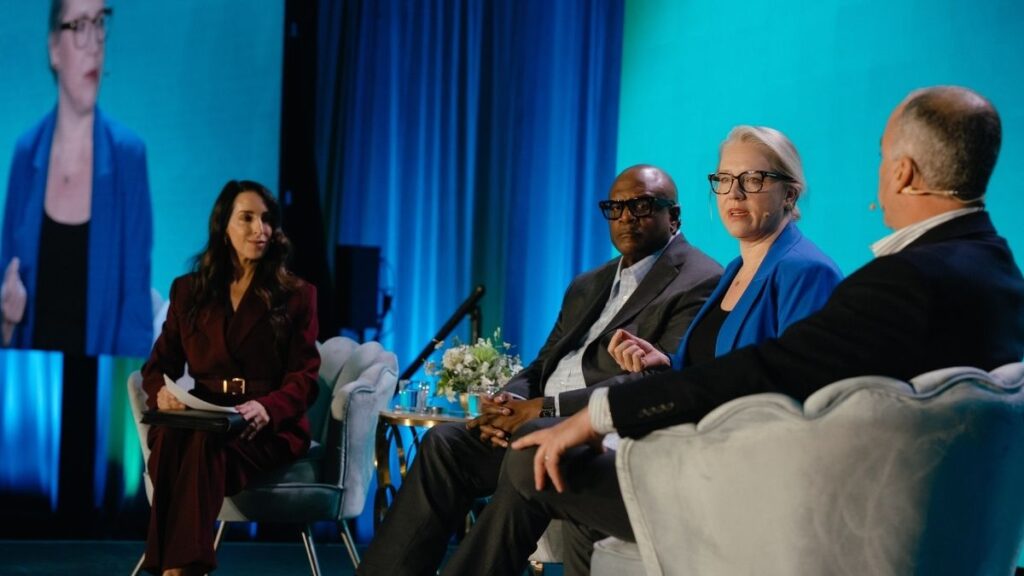
Ecolab investigates 700 to 800 employee reports a year. At the 2026 Global Ethics Summit, Brita Johnson, the company’s Chief Compliance Officer, told a room full of her peers what happens to every one of them. “It’s not a call center. There is a human being who is going to receive that complaint. I read every single complaint that comes in personally.”
People come to the Summit for that kind of candor. Practitioners explain what works, what doesn’t, and what they would change, and they bring their receipts with them. Earlier this year, the 17th Annual Global Ethics Summit drew nearly 1,400 total attendees from more than 550 organizations, and 90% of attendees surveyed said they took home practical takeaways from their sessions.
If you weren’t there, here’s some of what you missed in three of the Summit’s biggest sessions.
AI Takes the Volume, and Judgment Moves to What’s Left
The panel “AI Innovations in E&C: Superstar Agent or Don’t Believe the Hype” put Amazon, Meta, and Prudential Financial side by side to answer a question that every program is now asking: where does AI replace manual compliance work, and where does it create a faster version of the same risk? The panel’s organizations sat at different points on that journey, but their experiences all pointed to a consistent pattern: AI is absorbing the volume, and judgment is moving to a smaller, more concentrated set of decisions.
Amazon’s numbers set the tone: Across roughly 1.6 million employees in 120 countries, AI now handles more than 90% of the company’s conflict-of-interest and gifts and entertainment disclosures, and the company’s hotline triage time dropped from 72 hours to under four.
Yousri Omar, Associate General Counsel, Business Conduct & Ethics at Amazon, explained what the freed-up time is for. “If you’re getting lost in 10,000 rote decisions on a daily, weekly, monthly basis, as opposed to the 5% of those that really matter, then we’re doing a disservice to our client and the company we work for.”
The panel spent as much time on failure modes as on wins. Mia Beinhorn, Head of Special Initiatives at Meta, found that building a policy agent exposed how much compliance knowledge went unwritten. “The agent can’t answer like a human,” she said. Meanwhile, Amazon learned that AI can please as easily as it informs. An agent built to recommend discipline came back consistently stricter than human reviewers had been, which sent the team back to ask whether that reflected bias in past decisions or an agent guessing at what it thought the team wanted to hear.
Sally Sears, Corporate Ethics Officer and Vice President at Prudential Financial, named the payoff of getting governance right. “AI gives compliance the opportunity to move from being kind of a checkpoint along the way to being more continuously part of either product development or other applications,” she said.
Retaliation Fear Runs Highest at the Top
In “From Fear to Trust: Combatting the Realities & Perceptions of Retaliation,” Harper Wells, Chief Compliance Officer at Learning Pool, opened with a gap every program recognizes: Ninety-two percent of employees say they would report misconduct they witnessed, but only 52% ever do.
Joel Katz, Chief Compliance & Ethics Officer at EXL Service, then identified the same problem further up the org chart. Citing EY’s Global Integrity Report, he noted that 65% of board members felt pressure not to report, compared with 50% of employees, and 40% of board members had experienced or witnessed retaliation. A speak-up program that treats leadership as already convinced is protecting the wrong end of the organization.
The fixes were operational. Bayo Oyewole, Chief Conduct Risk & Ethics Officer at USAA, described “the call before the call,” when employees phone the ethics office to ask how it would handle a complaint before deciding whether to file one. His team treats those calls as their own stage in the process. “When we are doing investigations in a corporate environment, we are finders of fact,” Katz said. “We are not here to establish guilt.”
Ecolab’s Brita Johnson provided an especially persuasive story. Her team investigated one employee’s complaint and couldn’t substantiate it. Two months later, the team made a routine check-in call, and he told them, “what you have done was amazing, everything is resolved now.” The team had taken no additional action, but the follow-up call alone changed how he remembered the experience.
A Crisis Playbook Has to Match How Your Company Decides
“Weathering the Storm: Ethical Leadership in Moments of Crisis” opened with an honest account of a plan that missed. Nathan Prater, VP Group Compliance & Ethics at Ahold Delhaize, said the company’s first crisis playbook was technically sound but still wrong for the organization. It defaulted to command-and-control inside a company that runs on consensus, and as a result, people felt left out. The rebuilt plan stemmed from the company’s stated values. Prater also argued that the ethics voice and the legal voice on a crisis team should belong to different people.
Matt Cohen, Director & Associate General Counsel, Anti-Corruption & Global Trade at Meta, pushed compliance professionals to put numbers on their risk calls when they advise business leaders. “If you don’t give them a percentage, they’re going to listen to what you say and give themselves one.”
Stan Ball, Vice President & Chief Integrity Officer at Intel, made the case that a crisis also opens doors, drawing board attention that can unlock resources if the ask is ready when the attention arrives. “Crisis reveals the cracks in the system,” he said. “And you get a level of honesty and a willingness to bring something new to the table to resolve what people have known, but have never really said.”
What a Practical Takeaway Looks Like
The “practical takeaways” that 90% of surveyed attendees reported become more concrete when you look at what came out of these three sessions:
- A defined pathway for “call before the call” inquiries
- Follow-up check-ins with reporters at fixed intervals, whatever the outcome
- An audit of your policies and guidance before you build an AI agent on top of them
- Recurring tests of AI outputs for the wrong kind of agreement
- Separate people holding the ethics voice and the legal voice on your crisis team
Those came from three sessions on an agenda that also covered board reporting, AI in investigations, third-party risk, and small-group peer conversations that never get recorded. Attendees rated sessions 4.7 out of 5 on average, and the Summit earned a Net Promoter Score of +75 with zero detractors. Ethics and compliance teams don’t have a lot of time to spare, so the Summit makes sure the time you spend there delivers.
The 2027 Conversation Starts in Atlanta
The 18th Global Ethics Summit runs March 30–April 1, 2027, at the Omni Atlanta Hotel at Centennial Park. The Summit’s theme, “Human-Centered, AI-Assisted,” centers on the persistent AI question: what to automate, what to govern, and what stays human. The Summit caps in-person attendance at 600, and a full virtual program serves anyone who can’t travel that week.
Your peers are coming back, and new voices are joining them. Erica Salmon Byrne, Ethisphere’s Chief Strategy Officer, tells attendees to aim for “four new ideas, two new friends, and three new stories.” A recap like this one shows what kinds of ideas there are to gain. But the friends and the stories? Those only come from being there.
You can read what was said this year, or you can be in the room where next year’s decisions happen. Registration for the 2027 Global Ethics Summit is open now at attendges.com.
Author Bio
Bill Coffin | Editor-in-Chief, Ethisphere Magazine, Ethisphere
Bill Coffin is an internationally recognized writer and editorial leader in the fields of ethics, compliance, insurance and risk management. His work has appeared in The Wall Street Journal, BusinessWeek, Forbes and Fortune, as well as Compliance Week, National Underwriter, Risk Management, Best’s Review and other B2B media. Previously, Bill served as Director, Senior Editor at AIG, leading content strategy for one of the world’s largest insurance companies.