Over the past two years, the Indian regulatory landscape has undergone a major overhaul. The implementation of the Security Exchange Board of India (SEBI) mandate to listed companies to include Business Responsibility and Sustainability Reporting (BRSR) in their annual reports on the stock exchange from 1 April, 2022 indicates the regulatory body’s commitment toward the formal implementation of ESG programs. SEBI now requires companies to not only identify ESG risks but also detail their mitigation strategy and contingency plans against those risks. In September 2020, The World Economic Forum and the International Business Council (IBC) encouraged large global companies in the IBC–about 130 in all–to adopt ESG standards for their 2021 reporting, thus reaffirming the importance of ESG planning for organisations.
While considerable progress has been made in terms of ESG reporting in recent years with companies, investors, and regulators recognizing the importance of sustainability and responsible business practices, organizations must ensure ESG reporting is meaningful and actionable for stakeholders.
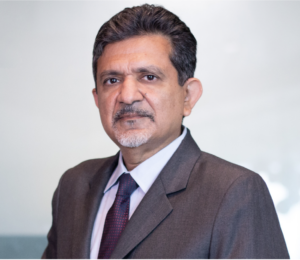
Arpinder Singh, Global Markets and India Leader, EY Forensic & Integrity Services.
With data at the heart of almost all transactions, it is more significant than ever before. There is constant exchange of information which creates multiple lacunas in organisations’ code of ethics and whistleblowing policies at large, which can be exploited. Ensuring compliance with regulatory and industry standards is crucial for building trust in the capital markets. The changing conversation around ESG has lent a valuable opportunity to businesses to evaluate their data protection, data breach control mandates.
Organizations should have an effective crisis management response plan in place to handle such events in a tactful manner. Given the recent emphasis placed on ESG by governments across the world, organisations that fail to incorporate optimum measures and policies to establish responsible environmental practices are likely to face reputational damage along with monetary penalty. Since ESG performance has become a metric of evaluation for financial performance, not measuring up can leave company boards vulnerable to allegations of greenwashing, which can hamper their prospects to garner potential investors. This is one of the reasons why the S and G factors of the ESG framework are likely to gain higher significance as they help evaluate an organization’s overall performance and long-term success.
The need for strong governance practices is of paramount importance especially in today’s times where organizations is riddled with risks and uncertainty. Organizations with strong governance practices, including independent board oversight, transparent decision-making processes, and effective risk management are more likely to build stakeholder trust and ensure long-term sustainability. As per a recent EY study, 90% of international investors looked for a company’s ESG performance as a key metric for long term business resilience. It is apparent that ESG compliance has been climbing up the list of priorities on organizations’ board agenda. We are at the confluence of ethics and ESG, and organisations must ensure that their ESG reporting mechanism is a well-oiled machine. ESG, as a part of corporate governance and code of ethics, should be viewed in a cohesive manner, communicating clearly that it is a part of the organization’s proactive business strategies.
Moving to the social factor of ESG, an organisation is considered just as competent and successful as its employees. An organization’s greatest asset is its workforce. Optimum talent management has been a persistent issue with most corporates, as observed in the wake of what has been termed the Great Resignation. Organizations that prioritize employee well-being and make diversity and inclusion an integral part of their firm agenda are likely to have a satisfied and productive workforce.
While a lot is being done to embed ESG into an organization’s underlying infrastructure, the social and governance factors are likely to higher significance in the years to come as organizations strive to build trust among stakeholders and contribute to a more sustainable and equitable future. With organizations pushing this agenda ahead full steam, I am optimistic the future of business will be defined by strong social and governance practices.
Arpinder Singh is Global Markets and India Leader, EY Forensic & Integrity Services. Arpinder has 25 years of experience in multi-jurisdiction investigations, forensic accounting and dispute advisory. He is the practice’s Global Managed Services Leader and a member of the Global Leadership Team. He has worked with corporates, regulators and law enforcement officials on many high-profile and global investigations across sectors. Having acted as an expert forensic accountant in a number of disputes, he is consistently recognized as one of the foremost legal practitioners in the Who’s Who Legal. Read more about Arpinder here.
Report covers recent corporate misconduct and outlines the ethics and compliance programs and practices that should be in place to mitigate risks and to drive business success
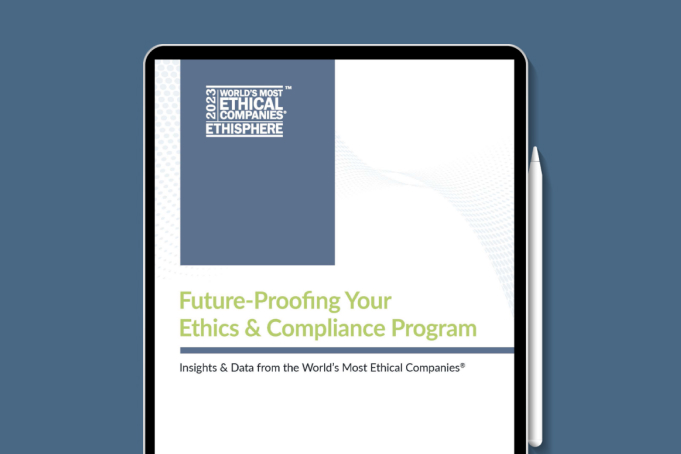
PHOENIX, AZ, May 22, 2023 – For corporate leaders looking to avoid reputational and business failures, Ethisphere, a global leader in defining and advancing the standards of ethical business practices, has released a new report titled: Future-proofing your Ethics & Compliance Program: Insights & Data from the World’s Most Ethical Companies.
The report looks at five recent case studies in which the lack of ethics and compliance controls and practices has resulted in damaged reputations and business losses. It then highlights the data and practices of the World’s Most Ethical Companies and provides practical steps to embed business integrity throughout a business.
“Every time a company makes headlines for the wrong reasons, it has a tremendous ripple effect that is felt by innocent people,” says Ethisphere CEO Erica Salmon Byrne. “By pulling the pragmatic from the theoretical and making it accessible and attainable, this report proves how robust governance, ethics, and compliance programs foster environments in which businesses succeed and all stakeholders benefit.”
The report covers the five key areas featured in the Ethics Quotient, the 200-point evaluation framework used in the World’s Most Ethical Companies application process. Data highlights include:
Ethics and Compliance Program:79% of the World’s Most Ethical Companies have a Chief Ethics and/or Compliance Officer. This is particularly relevant to the recent Silicon Valley Bank collapse, in which the organization was without a Chief Risk Officer for eight key months before its demise.
Culture of Ethics: 59% of World’s Most Ethical Companies honorees provide results of culture measurement to all employees. Transparency and a focus on ethical culture could have mitigated Major League Soccer team Real Salt Lake’s (RSL) player and fan boycotts in 2020.
Environmental and Societal Impact:93% of World’s Most Ethical Companies honorees regularly communicate with their third-party business partners about ESG. Setting clear guidelines and expectations with vendors about working conditions – and enforcing them — could have helped UK-based fast-fashion manufacturer Boohoo avoid a customer boycott in 2020, which caused a share price drop by 46% within a week, wiping out nearly $1.9 billion in Boohoo’s market value.
Governance:87% of World’s Most Ethical Companies honorees provide some form of standalone training to their Board. Instituting a Board of Directors, and ensuring it is fully equipped to provide meaningful guidance on matters such as corporate culture, business strategy, and risk management, could have been instrumental for avoiding the recent downfall of FTX—a cryptocurrency exchange run by Sam Bankman-Fried.
Leadership and Reputation: An organizational reputation for ethical behavior depends on three things: clear and unambiguous mission, vision, and values; values-based leadership that puts words into actions; and clearly communicated proof points to uphold its social license. Following these tenets could have avoided some of the negative impacts to business at Twitter–increased service outages, sharp drops in advertising revenue, and a valuation decrease by more than half–has taken since its new leadership in October 2022.
To download the report, visit 2023 Data Insights Report – Ethisphere | Good. Smart. Business. Profit.®Upcoming Webinar
To learn more about the findings, join a webinar on May 23rd from 1-2 pm EDT. Register at Ethisphere.com/events.
The Ethics Premium
Organizations should take note of the practices of the World’s Most Ethical Companies. Strong ethics is good business. Ethisphere’s 2023 Ethics Index, the collection of publicly traded companies recognized as recipients of this year’s World’s Most Ethical Companies designation, outperformed a comparable index of large-cap companies by 13.6 percentage points over a five-year period. This outperformance is the result of the kinds of practices that lead a company to be on the World’s Most Ethical Companies honoree list –investments in their people, culture, and communities.
About Ethisphere
Ethisphere is the global leader in defining and advancing the standards of ethical business practices that fuel corporate character, marketplace trust, and business success. Ethisphere has deep expertise in measuring and defining core ethics standards using data-driven insights that help companies enhance corporate character. Ethisphere honors superior achievement through its World’s Most Ethical Companies® recognition program, provides a community of industry experts with the Business Ethics Leadership Alliance (BELA), and showcases trends and best practices in ethics with Ethisphere Magazine. Ethisphere also helps to advance business performance through data-driven assessments, benchmarking, and guidance. For more information, visit https://ethisphere.comAbout the World’s Most Ethical Companies
In 2006, Ethisphere launched the World’s Most Ethical Companies® recognition program to measure and showcase the superior achievements of organizations that are committed to doing business with ethics and integrity. The process is rigorous and objective. It includes a 200-point assessment, documentation review, and research into an organization’s reputation and ethical practices. The process itself provides a way for organizations to assess their own programs against leading practices. World’s Most Ethical Companies honorees also enjoy recognition of their exceptional ethics and compliance programs. Ethisphere also broadly shares the World’s Most Ethical Companies data to help all organizations understand and improve programs. Learn more about the World’s Most Ethical Companies at WorldsMostEthicalCompanies.com.
Prove Your Ethics Program Works.
Benchmark your ethics & compliance program against Fortune 500 leaders.
La reconnaissance Compliance Leader Verification (CLV) de l’institut Ethisphere reconnaît les organisations qui s’engagent à mettre en œuvre et à respecter un programme d’éthique et de conformité de premier ordre.
Phoenix, AZ — Ethisphere, un chef de file mondial en matière de définition et de rehaussement des normes de pratiques éthiques dans les affaires, a annoncé aujourd’hui que SNC-Lavalin, pour la troisième année consécutive, avait obtenu la reconnaissance convoitée Compliance Leader Verification pour 2023-2024, ce qui prolonge les reconnaissances antérieures obtenues pour 2019-2020 et 2021-2022.
« Nous continuons d’être impressionnés par le programme et l’approche exemplaires de SNC-Lavalin pour enraciner l’intégrité à l’échelle de l’organisation. La société a investi des sommes importantes d’abord dans la conformité, et aujourd’hui dans les facteurs ESG, et a mis en œuvre des initiatives majeures de la plus grande qualité, consistant, entre autres, l’instauration d’une culture exigeant des cadres qu’ils communiquent fréquemment avec leurs équipes au sujet de l’éthique et de la conformité, ou encore à établir des procédures robustes de gestion des risques liés aux tiers », a déclaré Leslie Benton, vice-présidente principale et chef du contentieux adjointe, Ethisphere.
Fondée en 1911, SNC-Lavalin est une société spécialisée en gestion de projet offrant des services professionnels entièrement intégrés. Elle réalise des projets qui transforment le monde en procurant aux collectivités des occasions et des solutions de développement durable.
« Ce renouvellement de la reconnaissance Compliance Leader Verification d’Ethisphere est une récompense pour notre engagement indéfectible à respecter les normes d’intégrité les plus élevées dans la réalisation de projets et dans l’ensemble de la société. Je suis fier du travail acharné qui a été accompli pour élaborer et maintenir notre programme d’éthique et de conformité de calibre mondial, a affirmé Ian L. Edwards, président et chef de la direction de SNC-Lavalin. Nous ne devons jamais nous reposer sur nos lauriers si nous voulons continuer à gagner la confiance de nos employés et de nos parties prenantes. Notre priorité est d’adopter continuellement les pratiques exemplaires en matière d’intégrité dans nos processus et d’offrir une formation continue à nos employés, de manière à nous assurer de maintenir les normes les plus élevées dans tout ce que nous faisons. »
Le processus menant à l’octroi de la reconnaissance Compliance Leader Verification comporte un examen rigoureux du programme d’éthique et de conformité, ainsi que de la culture d’entreprise. Le processus comprend notamment le sondage de Ethics Quotient® (EQ), un questionnaire portant sur les éléments d’un programme efficace, une comparaison des pratiques du programme par rapport à celles des entreprises ayant reçu le titre de World’s Most Ethical Companies®, un examen approfondi des documents de l’entreprise ainsi que des entrevues avec des cadres supérieurs et des parties prenantes. De plus, SNC-Lavalin a choisi de mener une enquête sur la culture éthique afin d’évaluer les perceptions des employés.
Le rendement de SNC-Lavalin a été évalué selon six domaines principaux : les structures et les ressources du programme; les perceptions de la culture éthique, les normes écrites, la formation et la communication; l’évaluation des risques; la surveillance et la vérification; la mise en application; les mesures disciplinaires et celles d’encouragements.
Pour de plus amples renseignements sur la reconnaissance Compliance Leader Verification, consultez le site https://ethisphere.com/solutions/compliance-leader-verification (en anglais).
À propos d’EthisphereEthisphere® est le chef de file mondial en matière de définition et de rehaussement des normes de pratiques éthiques dans les affaires qui favorisent l’image de l’entreprise, la confiance sur le marché et la réussite commerciale. Ethisphere détient une grande expertise quant à la mesure et la définition de normes d’éthique fondamentales au moyen de renseignements fondés sur des données, en vue d’aider les entreprises à améliorer leur image, ainsi qu’à mesurer et améliorer leur culture. Ethisphere souligne les meilleures réalisations d’entreprise dans le cadre de son programme de reconnaissance World’s Most Ethical Companies et soutient une communauté d’experts de l’industrie par le biais de la Business Ethics Leadership Alliance (BELA). Pour plus d’information, visitez https://ethisphere.com.
À propos de SNC-Lavalin
Fondée en 1911, SNC-Lavalin est une société spécialisée en gestion de projet offrant des services professionnels entièrement intégrés et exploitant des bureaux partout dans le monde. SNC-Lavalin lie individus, données et technologie pour façonner et réaliser des projets et des concepts de classe mondiale, et ce, en proposant des solutions novatrices complètes tout au long du cycle de vie des actifs. Notre expertise est vaste – les services-conseils, les réseaux intelligents et la cybersécurité, l’ingénierie et la conception, l’approvisionnement, la gestion de projet et de la construction, l’exploitation et l’entretien, la mise hors service et les investissements de maintien – et nous l’offrons aux clients dans quatre secteurs stratégiques, soit de l’ingénierie, conception et gestion de projet (ICGP), des infrastructures, de l’énergie nucléaire et des ressources, appuyés par notre secteur Capital. Gens déterminés. Résultats déterminants. Vous trouverez des nouvelles et des renseignements pertinents à www.snclavalin.com ou sur Twitter @SNCLavalin.
Prove Your Ethics Program Works.
Benchmark your ethics & compliance program against Fortune 500 leaders.
Click Here For French Version: https://ethisphere.com/ethisphere-octroie-la-reconnaissance-compliance-leader-verificationmc/Ethisphere Recognizes SNC-Lavalin with Compliance Leader Verification™
Ethisphere’s Compliance Leader Verification (CLV) recognizes organizations with an outstanding commitment to achieving a best-in-class ethics and compliance program
Phoenix, AZ – Click here for the French version of this press release.
Ethisphere, a global leader in defining and advancing the standards of ethical business practices, announced today that SNC-Lavalin earned, for the third consecutive year, the coveted Compliance Leader Verification for 2023-2024, extending earlier verifications from 2019-2020 and 2021-2022.
“We continue to be impressed by SNC-Lavalin’s exemplary program and approach to embedding integrity across the organization. The company has made significant investments in compliance, and now ESG, and implemented major initiatives that are top notch, from building a culture requiring managers to frequently communicate with their teams on ethics and compliance, to robust third-party risk management procedures,” stated Leslie Benton, Senior Vice President and Deputy General Counsel, Ethisphere.
Founded in 1911, SNC-Lavalin is a global fully integrated professional services and project management company delivering projects that transform the world by bringing opportunities and sustainable solutions to communities.
“This renewed Compliance Leader Verification from Ethisphere is a recognition of our deep commitment to upholding the highest integrity standards in project delivery and across the company. I’m proud of the hard work that has gone into developing and sustaining our world-class ethics and compliance program,” said Ian L. Edwards, President and CEO, SNC-Lavalin. “We must never be complacent about Integrity matters if we are to continue to earn the trust and confidence of our employees and stakeholders. It’s our priority to continuously incorporate Integrity best practices into our processes and provide ongoing training to our employees, ensuring that we maintain the highest standards in everything we do.”
The Compliance Leader Verification process involves a rigorous review of an ethics and compliance program and corporate culture. It includes completing the Ethics Quotient® (EQ), a questionnaire covering the elements of an effective program; benchmarking program practices against the World’s Most Ethical Companies®; and extensive document review and interviews with executives and stakeholders. Additionally, SNC-Lavalin chose to conduct an Ethical Culture survey to gauge employee perceptions.
SNC-Lavalin’s performance was evaluated on six key areas: program resources and structure; perceptions of ethical culture; written standards; training and communication; risk assessment, monitoring and auditing; and enforcement, discipline, and incentives.
More information about Compliance Leader Verification is available at https://ethisphere.com/solutions/compliance-leader-verificationThe French version of this press release is available here.About EthisphereEthisphere® is the global leader in defining and advancing the standards of ethical business practices that fuel corporate character, marketplace trust, and business success. Ethisphere has deep expertise in measuring and defining core ethics standards using data-driven insights that help companies enhance corporate character and measure and improve culture. Ethisphere honors superior achievement through its World’s Most Ethical Companies recognition program and provides a community of industry experts with the Business Ethics Leadership Alliance (BELA). For further information, please visit https://ethisphere.com.
About SNC-Lavalin
Founded in 1911, SNC-Lavalin is a fully integrated professional services and project management company with offices around the world. SNC-Lavalin connects people, technology and data to help shape and deliver world-leading concepts and projects, while offering comprehensive innovative solutions across the asset lifecycle. Our expertise is wide-ranging — consulting & advisory, intelligent networks & cybersecurity, design & engineering, procurement, project & construction management, operations & maintenance, decommissioning and sustaining capital – and delivered to clients in four strategic sectors: EDPM (engineering, design and project management), Infrastructure, Nuclear and Resources, supported by Capital. People. Drive. Results. News and information are available at www.snclavalin.com or follow us on Twitter @SNCLavalin.
Prove Your Ethics Program Works.
Benchmark your ethics & compliance program against Fortune 500 leaders.
For twelve years running, Hasbro, one of the world’s most prominent makers of toys and games, has earned World’s Most Ethical Companies honors. For its Chief Purpose Officer Kathrin Belliveau, earning that honor is all about the joy of play, the power of purpose and why it’s okay that everybody cheats at Monopoly.
Congratulations on being named to the 2023 World’s Most Ethical Companies. This honor is the result of a lot of long-term work and organizational commitment to business integrity. With that in mind, why does Hasbro apply for this honor year after year, and what are your experiences like with the applications process?
As an organization, we are committed to benchmarking against best in class companies with respect to compliance, ethics and ESG. For us, it is a deep honor is not only going through the process and being named, but also learning through the process.
Every year, methodology changes in the application, highlighting new and emerging areas of ethics or compliance. As an organization across various aspects of ethics and integrity— whether it’s ethical sourcing, human rights, or our internal compliance and ethics program – for us, it’s a really incredible opportunity to benchmark against world class expectations and standards. So, the learning and measuring process is one of the key drivers for participation in this process.
A lot of companies say that the application process is a very valuable experience, because of the benchmarking aspect of it, like you mentioned. Is the self-assessment aspect of the applications process something you would be interested in doing, even if there wasn’t a potential honor attached to it?
Yes, absolutely. In fact, we do that across our entire Purpose organization and ESG practice, where we continuously score ourselves as part of our continuous improvement process. Whether that’s in the areas of human rights and ethical sourcing, or social impact, climate, and sustainability, constantly looking at external stakeholder expectations, best in class standards, and comparing ourselves. We do that quite frequently, and I would say that World’s Most Ethical Companies is probably the only benchmark exercise where there is potential recognition at the end.
Every World’s Most Ethical Companies honoree has a unique set of challenges, opportunities, market realities, and avenues towards achieving excellence. Can you speak to Hasbro’s unique perspective on ethics, compliance, and integrity, and how it informs your larger business strategy?
One of the challenges we have, like many Honorees, we are a global organization. And as a global organization, our ethics and responsibility program is our North Star. It’s something that provides an equalizer across every office we have around the world, across more than 50 countries. For us, it’s something that creates a norm for our values and the expectations that we have for our employees and our workforce, and what really binds us together.
One of the ways that we navigate our global business is by having a well understood set of compliance and ethics standards, together with our values, to really drive organizational consistency and be very clear with emphasis re: Hasbro expectations for operating globally around the world. Because we know there are many different cultural norms, many different regulations, many different global laws, that we are subject to. But we also feel very strongly that a successful organization needs to have its own core set of behaviors and ethical requirements.
Our core values inform every opportunity that we have, whether it’s commercial, marketing, or manufacturing.
Kathrin Belliveau, EVP & Chief Purpose Officer
As one of the world’s most recognized makers of toys and games, Hasbro is a very public-facing enterprise. Everyone who reads this article either has played with their own Hasbro product at some point or bought one for friends and family. It’s one of those omnipresent enterprises. Could you talk about how that heightened visibility factors into how you execute your ethics, compliance, and integrity work?
As a company that has the privilege of being in households around the world, and serving children and young adults, generally, there’s an expectation around what we are producing, and what’s going to be enjoyed by families and fans. There’s an expectation that the company producing beloved toys and games is doing so in a manner that respects human rights, operates ethically with an eye towards sustainability, and promotes safety across the board. Safety is paramount, particularly with toys and games intended for young children.
With privilege comes responsibility, and we aspire for the Hasbro logo, to serve as a quality mark.
One of my favorite quotes from the children’s educator, Fred Rogers, was that
“Play is often talked about as if it were a relief from serious learning. But for children, play is serious learning. Play is really the work of childhood.”
On the flipside of that, I am, myself, a longtime player of Dungeons & Dragons, and one of the things I have noticed in recent years is that the cultural direction of the game has made it more accessible to more players than ever before. The level of representation we now see in the game, especially for marginalized people, is such that I have seen the game directly benefit the mental and emotional wellness of its players in a deep and meaningful fashion.
I raise these things because Hasbro has a terrific purpose statement, which is, “Our purpose is to create joy and community for all people around the world. One game, one toy, one story at a time.” That is the first purpose statement I’ve ever seen that has the word joy in it. And when you look at your core values, one of them is simply, PLAY.
Given that these things are not just idle amusement, and that in some places they meaningfully improve people’s lives, as the Purpose Officer, how does the way in which you help to create safe products and a profitable company translate into making lives better in a way that maybe people don’t often think of?
Thank you so much. That’s such an important question. And it’s actually something that is core to everything we do.
We believe, each and every one of us—and myself personally, and in my capacity as Chief Purpose Officer—that play is a fundamental human need. It is a human right, and at the end of the day, it is not just for amusement, although there’s a lot of benefit to amusement and laughter. But it is also absolutely critical to our emotional, mental, and physical well-being.
Across our product lines, whether it’s Magic: the Gathering tournaments, Dungeons & Dragons-style storytelling, active play outside with NERF, or even our preschool board games that teach counting or winning and losing… we impart important life lessons.
We even saw this during the height of COVID, when manufacturing was shut down. We source in the U.S., including in Massachusetts, Texas, and other locations. And when manufacturing was shut down, we talked to the Governor of Massachusetts about how our products were being used not only for mental health and well-being, but also by teachers in online teaching across the country. The Governor agreed with us, and so our products ended up being deemed “essential products”, and manufacturing was allowed to be reopened. That was so remarkable, and I am so proud of that, because that was fundamentally about the understanding and belief that games and toys actually serve a human need for play and for education. I think about social impact in everything we do to bring joy to children, especially in parts of the world like Ukraine or children that have been impacted by devastating natural disasters. Joy is a fundamental human right.
When my girls were little, and we would go to see the pediatrician, the pediatrician would say, “Are they eating? Are they sleeping?” And I would always think to myself, “Where’s the question about whether they are playing?” Because to me, play is part of the well-being of a child, and how healthy human beings are formed.
So, thank you for asking that question. I really appreciate that because for us, that’s what it’s all about. When we refreshed our purpose statement about a year ago, we considered the communities that are created through play, whether they are online or in-person, or it’s just you with your family. That is a community memory and experience that ultimately leads to well-being. Even if you’re fighting and cheating over Monopoly, at the end of the day, you’re still building an experience and wonderful memories. And I think we need more of that in the world today, quite frankly.
I wholeheartedly agree. I will tell you that as the head of an ethics publication, I know of no one who has played Monopoly and has not, at some point, seen somebody cheat at the game or cheated themselves. One of the most powerful lessons in institutional honesty that you’re ever going to get is by going around that Monopoly board.
It’s funny … as a tongue-in-cheek gesture, we released a special edition Cheaters Monopoly a few years ago, and it was just a funny nod to the fact that many in this game cheat. We were trying to poke a little fun at the fact that it’s a very long game, and people get very competitive about it. My husband is a real estate lawyer and of course loves Monopoly. He is very, very good at it and he will not give in until the very bitter end. Sometimes we need to cheat just to get it over with!
What is your favorite token when you’re playing Monopoly?
Oh, that’s a great question. I love all of them, but my favorite is the thimble because my grandmother was a seamstress.
Mine is the top hat. I just love how it rocks on the board. That, and it prevented arguing with my brothers over the race car.
It’s a classic. It’s Mr. Monopoly’s hat, you know.
What is one of the most inspiring things about your ethics and compliance program that people outside of Hasbro are not likely to know about?
One of the things that’s very interesting about toy and other consumer product supply chains is that the workers on the factory floor are primarily women. In some countries, it’s a matter of women workers simply being less skilled. In some, it’s cultural and societal. Our hope is that one day they become the factory managers, and they’re the ones who are the leaders on the line. But again, there’s so many cultural and structural obstacles in those countries. In the U.S., it’s a little bit different because here, we primarily manufacture games, which is mainly paper and cardboard. That’s very easy to automate. But if you go to a toy factory, that’s very much a lot of human energy.
As a company, we are dedicated to DEI. As a female leader myself, I have a lot of women who are senior leaders on my team. And at the end of the day, we’re working across our entire workforce to ensure that women set goals for themselves, and are represented in leadership. And we do this for other lesser-represented groups, as well.
Looking at our toy supply chain, the workers on the factory floor are primarily women across the globe, and the managers are men. We don’t own any factories, but we have very rigorous programs across the world, and we’re on the factory floors when product is being produced. We are very engaged with the vendors to make sure they’re upholding our business ethics principles, so we decided that we would implement a program to help elevate the lives of women on the factory floor.
We have a number of programs in India and China, and we’re introducing them in Vietnam and around the world, where we provide programs that the factory owners support because we have demonstrated it’s a win-win for everyone. Their workers get to go to classes, and we offer everything from health and hygiene to financial literacy. What we’ve seen over the last several years, where we have been measuring the impact of these programs, is that the factories have become places where the workers actually want to work. Even though women working there are becoming upskilled and in some cases leaving, management are not upset because they’re actually building a more engaged, happy workforce and desirable workplace.
So that’s one of the programs where we’re scratching the surface of what we can accomplish. But already what we’re seeing from the results is inspiring. We know we’re starting to make a difference, and everyone around the company is so moved by it because it’s something you can see.
Hasbro has earned World’s Most Ethical Companies honors on a long-running basis. How have you maintained such a high level of consistent excellence, even as business, regulatory, and economic conditions change year after year?
It goes back to our North Star that every employee around the world understands how we operate. It’s the lens through which we look at every opportunity. We don’t take being honored lightly, and we certainly don’t expect it on an annual basis. We’ve been honored to be recognized 12 times, because conditions change, expectations change, and what we try to do as a company is continuously improve and evolve.
New team members representing different generations are entering the workforce, and they have different expectations, so as a company we try to stay true to our North Star. But we’re also flexible, and we’re really committed to continuous improvement. I think that’s probably the one thing that we really do: commit to continuous improvement. We also benchmark extensively. We’re continuously looking not just within our industry, but to learn from the successes of our peers, especially when it comes to ethics and compliance. We never stay still. We’re continuously evolving, assessing, reassessing, and self-critiquing to make sure that our North Star is constant. But how we achieve that North Star is continuously evolving, too.
Would you recommend that other companies seek World’s Most Ethical Companies acknowledgement? And if so, what advice would you give them?
I think that for any company that is seriously committed to ethics, operating responsibly, and sustainability for their stakeholders, the process and the methodology of World’s Most Ethical Companies is best in class. I would highly recommend it to companies that are looking to start an ethics and compliance program and for companies that have been at it for a long time and want to see how they can improve.
I think it’s an incredibly valuable exercise. And if you’re able to attain it for your employees, your shareholders, and your stakeholders at large, it really means a lot, because it’s a very prestigious honor. It’s a real testament to your company. But even if you don’t achieve it, it is a great framework and set of standards to aspire to. And inform your program globally as well, so I highly recommend engaging in the process.
For us it’s been a continuous learning experience. We are an organization committed to learning and innovation. This process is a way to measure how we’re doing on an annual basis.
ABOUT THE EXPERT
Kathrin Belliveau is EVP & Chief Purpose Officer of Hasbro, Inc. As a member of the Executive Leadership Team she reports to the CEO and is responsible for ESG, Climate, Sustainability, Human Rights, Ethical Sourcing, Global Quality Assurance, Global Product Safety, Philanthropy and Social Impact, Global Corporate Communications, Global Consumer Affairs, Global Government, Regulatory and External Affairs, and Global Events at Hasbro.
In the time it takes to read this interview, a FedEx delivery vehicle will probably drive past your home or office at least once. Such is the omnipresence of one of the world’s foremost transportation, e-commerce, and business services. For Chief Compliance Officer Justin Ross, overseeing a compliance and ethics program that brings it all together takes vision, confidence, culture, and innovation.
Why did FedEx apply this year?
FedEx has been around since 1973. But compared to the rest of the company, our Compliance team is still relatively young. Before 2015, our compliance function was very decentralized and resided in our various operating companies. From a legacy perspective, these companies operated independently, and each of them did their own thing on compliance. The operating companies did a good job on compliance and had their own initiatives and strategies, but there was no corporate oversight of compliance, which resulted in a lack of consistency, not a lot of transparency among the compliance teams, and some duplication of resources.
In 2015, we created a compliance team at the corporate level to oversee compliance for the enterprise and began centralizing a lot of our compliance programs. Since that time, the compliance teams have worked really hard to create a truly enterprise compliance program that is consistent across the board and contains many leading practices. We’ve also done some really neat things around risk assessments, automation, and data analytics that got us thinking we were at the maturity level where we could be considered for this honor. Two, three, five years ago, I wasn’t sure we were ready for this. But our program has evolved to the point to where I thought we would be very competitive.
A lot of large organizations have operations that recognize the local realities of their field offices, but at some point, there needs to be a single source of truth. That’s a lot easier said than done.
No doubt. A lot of times field offices or independent business units want to do their own thing or don’t want the corporate office to tell them what to do on compliance. But they’re not going to do something just because you tell them to. The key is to show that there is value to the organization and to any independent business units of a consistent, enterprise compliance program with consistent processes, controls, training, and tools. By sharing best practices, emerging risks, and compliance resources and tools, the entire organization can be more efficient and ultimately more compliant. We’ve gone through this journey at FedEx and the compliance teams have succeeded in main part because we have shown value to the business.
Justin Ross, Chief Compliance Officer
What was the World’s Most Ethical Companies applications process like for you?
It is an arduous process. To anyone that wants to go into this, be prepared. It’s not a weekend. You’re looking at every aspect of your program to see how it shapes up against best practices, which Ethisphere really has a good handle on. To me, going through this process is the best self-evaluation of your program that you can do because you are looking at all the best practices, and that really helps you evaluate where are your gaps, where are you good, and where you need to do more.
What I like about it is that it’s not static. Each year, Ethisphere adds something to it. Look, best practices aren’t static. Regulators expect different things. You know fraudsters are doing new and different things to companies. So this gives us an opportunity to look at an evolving data set of best practices and react accordingly by updating our program.
FedEx is extraordinarily present in our lives—there are FedEx trucks passing outside of my window right now, in fact. How does the highly visible nature of your work impact how you view and operationalize ethics and integrity?
Because we’re such an integral part of everyone’s supply chain, it’s extremely important, I think, for us to set an example on ethics and integrity. First of all, our customers expect it. Our big, global customers come to us all the time and ask us to tell them about our ethics and compliance program. They want to know about the stability of our supply chain and our due diligence practices. And we have to show our big customers our ethics and compliance program, because it’s important to them. We’re part of their supply chain. That’s why it’s important we act as an example, such as being honored by World’s Most Ethical Companies.
We’re also setting an example for the people downstream in our own supply chain, as well for our vendors and business partners, on how important this is to us. We have over 550,000 team members and operate in over 220 countries around the globe, so our potential span of influence is huge. It’s why ethics and compliance is so important to us and why we stress the importance of ethics and compliance to our business partners. By doing this, we can hopefully make a positive impact on the communities where we operate as well.
How would you say that your ethics compliance program aligns with or further empowers your organization’s strategic vision, especially from a supply chain standpoint?
I think its really about trust here. Our overarching company strategy is Deliver Today and Innovate for Tomorrow. Deliver Today focuses on the immediate work at hand, which is to provide superior service to our customers. A big part of that customer relationship is centered around trust. Our ethics and compliance program and the FedEx culture help us to build and maintain that level of trust with our customers. And that is absolutely critical to our business’s success.
The second part of our strategy is Innovate for Tomorrow. And our compliance team has really leaned into this strategy through our work around automation and analytics. With automation we are moving our processes away from manual processes and into automation. This will help us be more efficient and allow us to better allocate our people resources on higher risk issues. Our company leadership has also challenged all of us at FedEx to Innovate Digitally by finding ways to use data to be more efficient and better serve our customers, and the compliance teams are trying to further this organizational strategy through our work in automation and analytics. We are continuing to find ways to use data analytics to improve our compliance program, specifically around prevention and detection of wrongful conduct and identifying and managing compliance risk. We’ve made some great strides here with our hotline data and accounts payable transactions.
What projects in the last year have really helped you move the needle at FedEx?
One project that I think we’ve really improved and helped embed compliance within the business is our compliance risk assessment. When we first began doing our compliance risk assessments, they were very ad hoc, very manual, very surface level. We’ve really changed that to where we’re doing compliance risk assessments in each business unit for the risks that we own, such as anti-corruption, antitrust, fraud, export controls, data privacy, gifts and entertainment, things like that. We do that on a rolling basis, working closely with the compliance teams in that business unit. We do extensive business partner interviews with those business units where we’re trying to identify the risks that they’re seeing. Through these interviews, we’ve really helped improve the visibility of compliance and ethics in those business units and embed compliance within them. We’ve helped stress the importance of compliance and ethics to those business unit leaders.
Those risk assessments have helped us embed compliance within the business because we’re there learning about risks within that part of the business, but we’re also teaching them about compliance and ethics, and how to manage those risks. So that’s something that the team’s been really proud of. We touched every piece of the business over the last two years doing that.
And we have gotten such great feedback from the business on these risk assessments, too. Every time, the business comes back to us and says, “Thanks for coming in here. We’ve got a better view on ethics and plans. We know where to go now, where we didn’t necessarily before.”
“Every time, the business comes back to us and says, ‘Thanks for coming in here. We’ve got a better view on ethics and plans. We know where to go now, where we didn’t necessarily before.’”
What is FedEx’s culture of ethics like? And how has your team’s work helped to advance that culture across the organization?
My job is way easier because of FedEx’s great ethical culture that was at FedEx long before I got here. I’ve worked all over the world for FedEx. Everywhere I go, there is a sense of doing the right thing. And that makes the compliance teams’ jobs so much easier.
And it starts at the top, with our senior leadership. In every communication that goes out from senior leadership, safety and integrity are always stressed. And senior leadership is always willing and able to support the compliance teams on our compliance initiatives, whether it is making a video for compliance week, communicating the importance of a compliance initiative, or providing input about our various compliance programs.
I’ll give you one example that really highlights the FedEx culture, specifically from our senior leadership. We have an annual compliance champion selection process where employees are asked to nominate a compliance champion. After the nominations come up, we have a steering committee that will select the champions. The first year we did this, I reported the winners and why they were chosen at the quarterly Audit Committee meeting. After the meeting, Our Audit Committee Chair asked me for the names and emails of those compliance champions. He sent them a personalized note, and you can’t over-emphasize how much that means to those compliance champions. That really makes an impact. To me, that’s tone at the top. And it’s walking the walk.
But even with our great existing culture at FedEx, we have to continue to work on it to make sure we maintain that great culture. And the compliance teams play a big role in that, mainly around making sure employees understand the importance of an ethical culture, the importance of speaking up, and making sure that wrongful conduct is appropriately and consistently addressed across the company. We do this through a variety of measures, including embedding culture ambassadors in our various business functions, publishing compliance newsletters, publicizing lessons learned taken from real scenarios within FedEx, educating employees about the consequences of cultures gone bad, and recognizing compliance champions. We also periodically gauge our culture and the effectiveness of our compliance programs through culture surveys and follow up with real action plans from those surveys.
“When we get the World’s Most Ethical Companies honor, our customers see that. And that makes them comfortable to do business with FedEx employees.”
It’s great to see how your leadership gets directly involved, whether it’s when you reach out for support, or when they participate in communicating your team’s objectives. Not all leaders do that, and there is real power when the tops of the organization take time out of their day to get on camera and lend their voice to your program.
When we see that, it motivates us. So. If you’re a compliance team and you’re not getting any support from senior leaders, it is absolutely demoralizing. But when you see senior leaders really showing an interest in compliance, and answering the call whenever you ask, it really motivates and empowers our team, as well as the entire company. That’s why Tone at the Top is so important to an ethical culture and effective compliance program.
Why is earning the World’s Most Ethical Companies honor important to your organization?
Our compliance teams work very hard. And to see us recognized for something like this is absolutely key to making the teams feel appreciated, motivated, and like they’re making an impact. It’s been great for my team and to our other compliance teams within the business units.
The other thing is, it is really good for business. I’m telling you, our customers ask us about our compliance program all the time. They want us to tell them about our due diligence. How we manage risk. And these aren’t one-off, easy conversations. These are in-depth presentations with our big customers around what we’re doing on ethics and compliance. When we get the World’s Most Ethical Companies honor, our customers see that. And that makes them comfortable to do business with FedEx.
Employees want to work with ethical companies. Investors want to invest in ethical companies. Customers want to do business with ethical companies. And communities want to have ethical companies in their community. So this honor is good for all of those stakeholders. When World’s Most Ethical Companies was announced this year, that morning, I got so many calls of congratulations.
This award is not a singular award. It’s not about one person. And it’s really not even about the Compliance team. It’s about the organization. There is no way FedEx could have achieved this honor without the support of all of our team members across the organization, from the top to bottom. It’s something that we all should be proud of, not just the compliance teams. Every single person that works at FedEx that had a say and had input is a reason why we got this. I think that’s important to say because this interview may be with me, the Chief Compliance Officer, but our front-line employees, drivers, operational workers, back office employees, they all have as much to do with this as I do, or my team does.
ABOUT THE EXPERT
Justin Ross is Chief Compliance Officer for FedEx Corporation, responsible for developing and overseeing enterprise-wide compliance programs for FedEx operating companies and international regions.