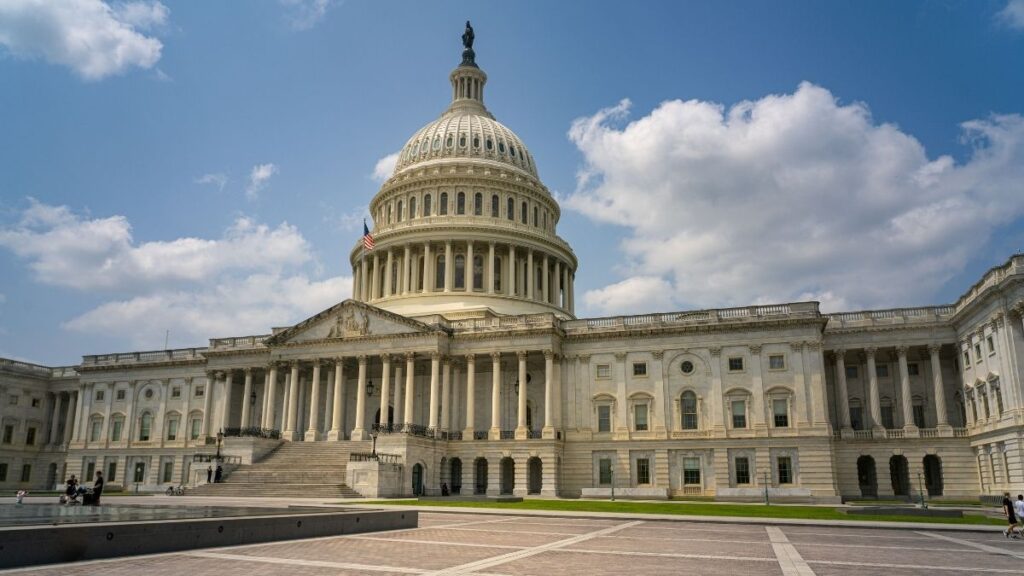
10 Minutes - Read Now
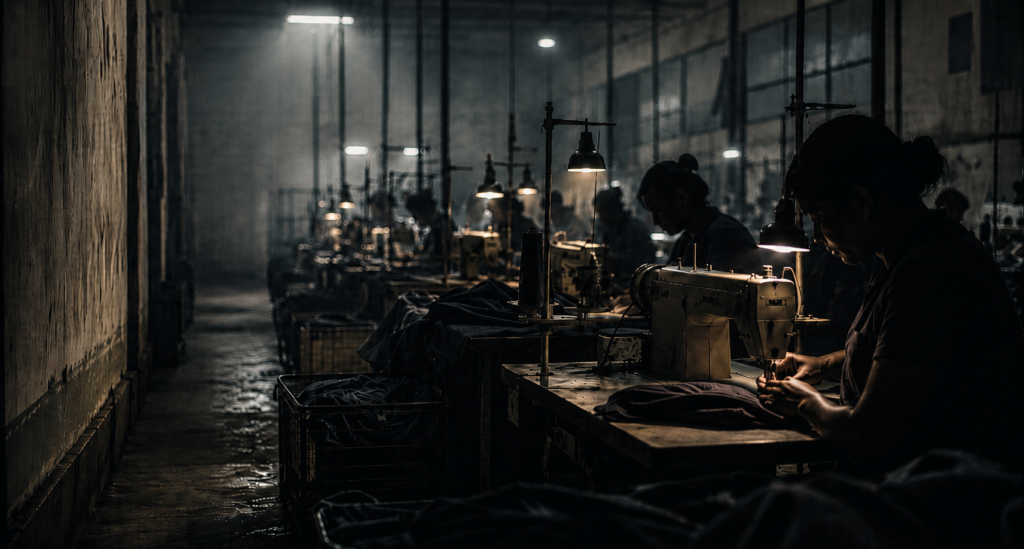
The announcement came quietly enough: Earlier this spring, the U.S. Trade Representative launched 60 new Section 301 investigations, targeting countries whose weak enforcement of forced labor rules may have artificially lowered the cost of producing goods. It may not have sent you immediately to your legal or compliance team. But it should have.
The core argument the USTR is making is that if a country isn’t properly preventing forced labor, its producers can bring goods to market at an unfair price. The remedy for unfair pricing is a tariff. This marks the first time the USTR has used human rights violations as the basis for a Section 301 action under the 1974 Trade Act — a novel application of a statute that has been on the books for decades.
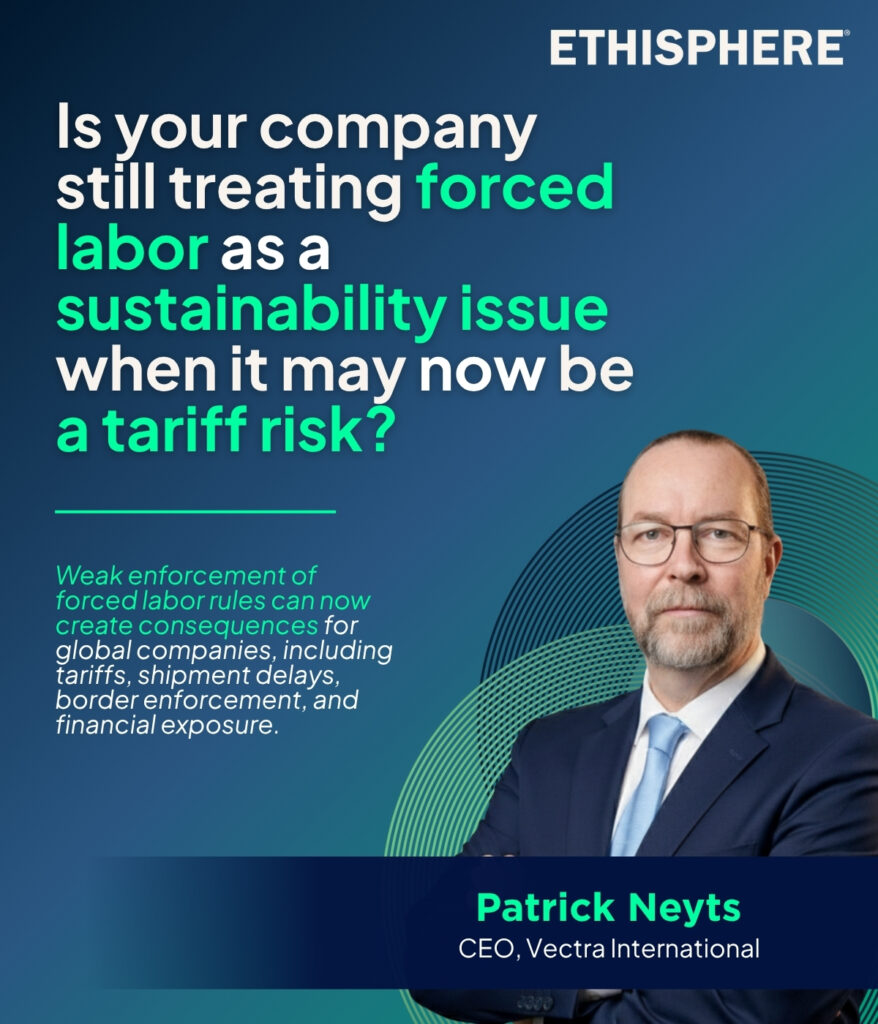
What’s changed is scope and stakes. The legislation that’s been building for years — Section 307 of the 1930 Tariff Act, which prohibits importation of goods made with forced labor; the Uyghur Forced Labor Prevention Act; CBP’s Title XIX enforcement authority — created a framework that applied primarily at the company and product level. Section 301 investigations add a country-level dimension. If a country lands on the list and the USTR imposes a tariff, every shipment from that country faces increased scrutiny, regardless of whether your specific goods have any forced labor issue. That’s a new layer of business continuity risk that most companies haven’t priced in.
The Definition Is Broader Than You Think
One of the most important conversations compliance leaders need to have right now is about what forced labor actually means under the law — because it’s broader than most people assume.
When most of us picture forced labor, we picture extreme situations: people confined, unable to leave, working without pay. Those situations exist and are horrific. But the International Labour Organization’s eleven indicators — which CBP applies when assessing whether producers used forced labor to make goods — cover a wider range of practices. Among the less obvious ones:
- Workers paying recruitment fees. The principle is straightforward: a worker should never pay for their job. When a recruiter charges the worker rather than the company, that fee creates a debt that can amount to a form of bonded labor. If you think this doesn’t happen in sophisticated economies, auditors have found it in factories in Japan, in Indonesia, and in facilities supplying luxury goods in Italy.
- Excessive and forced overtime. If workers are routinely pushed into 90- or 100-hour weeks to meet contractual requirements, that qualifies as a forced labor indicator — even if the overtime is technically “agreed to.”
- Confiscation of identity documents. Holding workers’ passports or IDs at the start of a shift and returning them only when workers hit their production targets is a recognized form of coercion. It’s also, practically speaking, a thing that’s happening in facilities right now.
What makes the recruiter fee issue particularly difficult is the chain of intermediaries involved. A migrant worker traveling from Nepal to the Emirates might pass through three to seven layers of recruiters. Even if your direct supplier is clean, the question is whether you have visibility into who recruited the workers at each level — and whether fees were extracted anywhere along the way.
Getting Remediation Right
When companies discover that workers paid recruitment fees and attempt to remediate, the instinct is sometimes to repay workers over time, conditional on continued employment. That actually makes things worse, because it converts one form of coercion into another — indentured servitude in practice, if not in name. The correct approach is immediate reimbursement with interest, followed by a systemic review of recruiter contracts and onboarding practices.
The “Wholly or in Part” Problem
Perhaps the single most consequential concept in supply chain forced labor compliance is the “wholly or in part” standard in Section 307 of the 1930 Trade Act. CBP doesn’t need to prove your finished product relied on forced labor. Finding it in a single component anywhere in the production process is enough.
The stakes of this became concrete when CBP detained thousands of European luxury vehicles at the U.S. border — Porsches, Bentleys, and Audis — because a Chinese subcontractor had manufactured a single engine component using forced labor. The company assembling the finished vehicle had no direct relationship with that subcontractor. It didn’t matter.
This means the risk isn’t only in your tier-one suppliers. It can live in tier two, tier three, or tier four. Your grievance mechanism, however well-designed, will never reach that deep.
Why Audits and Hotlines Aren’t Enough on Their Own
A lot of companies look at their compliance practices and feel reasonably protected — they have a hotline, conduct audits, and maintain supplier codes of conduct with termination clauses. The data tells a more complicated story.
In the technology sector, more than 95% of companies say they have internal policies prohibiting modern slavery in their supply chains. But only 75% specifically call out the practice of recruiter fees. That gap matters. You can’t prohibit what you haven’t specifically defined.
On audits: there are three pillars of a credible social compliance audit — document review, direct observation, and worker interviews. All three need to be present. Audits that lack worker interviews are not doing the job. Workers in supplier facilities won’t always say directly what’s wrong, especially when they fear retaliation.
Reading Proxy Signals
An excellent example of this comes from Erica Salmon Byrne, Chief Strategy Officer at Ethisphere, who shares an anecdote about a facility in Cambodia where a company’s hotline was getting flooded with calls about cafeteria food — call after call, week after week. No one took it seriously. When someone finally flew out to investigate, the cafeteria wasn’t the issue. Managers were confiscating workers’ papers every morning at check-in and returning them only after workers hit their production targets. The workers couldn’t bring themselves to report the actual problem, so they used the food as a proxy signal, hoping someone would eventually show up and look around.
Hotlines are valuable. But they’re not a substitute for a functioning system. You have to think about what your investigation protocols look like when something comes in, whether workers actually trust the mechanism, and how you’re communicating its existence and purpose. Particularly in deep supply chain relationships, workers who are in genuinely coercive situations may be far too afraid to use any formal reporting mechanism at all.
The Internal Partnership Problem
Supply chain forced labor risk doesn’t belong to any one function. It’s a procurement issue, a legal issue, a compliance issue, a finance issue, and increasingly a board-level material risk concern. But multidisciplinary teams are only as good as their actual collaboration. Having a combined team and having a functional combined team are different things.
Three questions that will tell you which one you actually have:
- Does everyone on the team share the same definition of compliance? If sustainability, legal, and procurement are each working from a different understanding of what they’re trying to prevent, you have a coordination problem, not coordination.
- Do the KPIs of each function align, or are they contradictory? Procurement optimized for speed and cost reduction behaves differently from procurement optimized for due diligence quality. If those incentives point in opposite directions, the team will too.
- Have you defined what constitutes acceptable risk, and can you quantify it? If the answer to that third question is no, you’re not managing risk. You’re just hoping for the best.
Build a System That Doesn’t Chase Jurisdictions
The regulatory landscape for forced labor is accelerating. Twenty countries introduced their own forced labor laws in roughly a two-month window this year. The EU Forced Labour Regulation takes effect in December, and the Corporate Sustainability Due Diligence Directive adds another layer. Building a compliance approach that responds to each jurisdiction individually is understandable — but it’s almost entirely wrong.
Rather than imagining the regulations around global forced labor as a constellation of overlapping Venn diagrams, think of them as a flower. There’s a large circle in the center — core principles around market access, due diligence, and accountability that nearly every major regulation shares. Around that core are smaller differences: specific enforcement mechanisms, thresholds, documentation requirements. Build your system around the center, and the differences at the edges become manageable adjustments rather than wholesale rebuilds.
A mature supply chain due diligence management system has to address: supply chain mapping (do you actually know who your tier-two and tier-three suppliers are?), risk assessment, training, grievance mechanisms, stakeholder engagement with NGOs and community organizations, and reporting and disclosure. On that last item, companies sometimes devote significant resources to collecting data for reporting purposes while gaining little insight from it. The more useful frame is: are you collecting data that helps you predict where risk is likely to occur, not just document that you looked?
Using AI to Get Ahead of the Risk
AI is increasingly relevant here. CBP is already using it to identify which containers to scrutinize. Companies that want to use AI effectively for supply chain risk need to go beyond general-purpose tools. You need to train the technology specifically for this domain, feed it quality data — particularly what practitioners call “residual risk” data: actual program maturity assessments combined with outcome data, not just country-level inherent risk indicators — and apply it through teams that understand the contextual differences in what they’re seeing. Done right, it moves you from pattern recognition to predictive analytics, identifying where problems are likely to occur before they do.
One additional risk that tends to get overlooked in periods of rapid supplier switching: when companies shift sourcing quickly to avoid tariffs, due diligence gets truncated. People say they need product on the water, not another audit cycle. That pressure is real. But onboarding suppliers without proper diligence doesn’t eliminate the risk — it just transfers it to a new part of the supply chain where you know even less.
Where to Start
Two things worth acting on now:
Understand your actual exposure. That means knowing who your suppliers’ suppliers are, what migrant labor looks like across the supply chain, and what recruitment practices look like at every tier. A supplier that looks riskier on paper may actually be cleaner than one operating in a country you’d consider low-risk. Appearance of risk and actual risk often don’t match.
Equip your people. Your employees — in procurement, in operations, in the field — are your earliest warning system. The internal compliance health of your own operations (training completion, engagement with compliance activities, responsiveness) tells you something real about the culture in which your people make supply chain decisions. That data is already available to you. Use it as a vector in your risk assessment, not just a HR metric.
The enforcement mechanisms that historically governed forced labor — fines, court proceedings, reputational campaigns — were slow and difficult to operationalize. Denying market access is different. When goods sit at the border, the cost is immediate and concrete. CBP detained $1.4 billion worth of merchandise in a single year, stopping 430 to 500 shipments every month — which makes the question of whether your program is mature enough to withstand scrutiny no longer theoretical.
Expect Section 301 outcomes by early July. Whatever they bring, the trajectory is clear. Forced labor enforcement is converging globally around a single lever — market access — and you need to demonstrate your supply chain is clean. If you haven’t built your program to meet that standard, now is the time to close that gap.
For a deeper dive into this topic, check out Ethisphere’s webinar, “A New Supply Chain Risk: The Implications of Forced Labor and Section 301 Investigations,” which is now available on-demand.
Author Bio

Bill Coffin | Editor-in-Chief, Ethisphere Magazine, Ethisphere
Bill Coffin is an internationally recognized writer and editorial leader in the fields of ethics, compliance, insurance and risk management. His work has appeared in The Wall Street Journal, BusinessWeek, Forbes and Fortune, as well as Compliance Week, National Underwriter, Risk Management, Best’s Review and other B2B media. Previously, Bill served as Director, Senior Editor at AIG, leading content strategy for one of the world’s largest insurance companies.